

Understanding Chart Patterns in Trading
📊 Learn how to spot and use key chart patterns for trading and investing in Nigeria. Access reliable PDFs to sharpen your skills and make informed market moves.
Edited By
James Harwood
Trading chart patterns play a key role in helping traders spot market trends and predict price movements. These patterns are visual clues found on price charts that hint at potential shifts in supply and demand. Understanding them allows traders to make smarter, more timely decisions rather than rely solely on gut feel or news buzz.
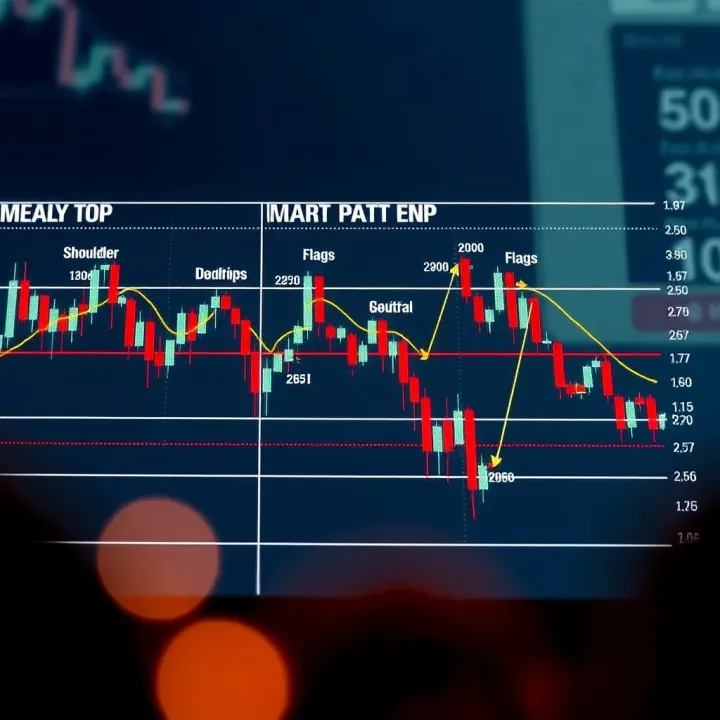
Most patterns form as a result of traders’ collective behaviour and how buying and selling pressure fluctuates. For example, a classic head and shoulders pattern signals a likely trend reversal, while triangles often indicate a continuation of the current trend. Recognising these shapes early helps traders decide when to enter or exit positions.

A chart pattern isn’t a crystal ball, but a useful signal that requires confirmation from other indicators or volume analysis before committing to a trade.
It’s also vital to know that not every pattern leads to the expected outcome. Factors like economic data releases, unexpected events, or market sentiment can override technical signals. That’s why chart patterns work best when combined with a broader trading strategy.
Here are some practical points for reading chart patterns:
Spot clear formations: Focus on well-defined patterns rather than forcing examples where the shape looks messy.
Check volume: Confirm if trading volume supports the pattern’s signal; for instance, volume often rises during breakouts.
Set entry and exit points: Use pattern targets to plan where to take profits or place stop-loss orders.
Practice patience: Patterns can take time to complete; jumping in too soon might cost you.
Looking ahead, this guide will break down the most common chart patterns, explain how they form, and offer tips for applying them to real trades. The goal is to sharpen your market reading skills with clear, practical advice that fits your trading style.
This approach balances technical knowledge with the realities of market behaviour, avoiding overreliance on patterns alone. Whether you’re day trading or investing longer-term, understanding chart patterns adds a stronger dimension to managing risk and spotting opportunities.
Chart patterns represent distinct visual shapes formed by the price movements on trading charts. These formations, such as triangles, head and shoulders, or flags, reflect changes in supply and demand dynamics over time. Traders watch these patterns closely because they can signal potential future moves in market prices, providing clues about when to enter or exit trades. For example, an ascending triangle on a share price chart might hint that buyers are growing stronger and a price breakout could be on the cards.
Beyond the mere shapes, chart patterns capture the collective behaviour and psychology of traders. When a pattern forms, it shows the tug-of-war between bulls and bears—buyers and sellers—in the market. This human element is vital since prices don't move randomly but rather respond to expectations, reactions to news, and shifts in sentiment. When a double bottom pattern appears, it can indicate that sellers have given up pushing prices lower, allowing buyers to take control. Understanding this psychological backdrop helps traders gauge the strength or weakness behind price moves.
Chart patterns are essentially shapes drawn by price highs and lows over time. Patterns like rectangles or pennants are easy to spot once you know what to look for. These patterns provide a clear, visual language conveying information instantly, which is invaluable in the fast-moving markets. For example, a flag pattern generally looks like a small, sideways rectangle after a sharp price move, suggesting a pause before continuation.
Recognising these formations correctly can guide traders in anticipating price behaviour ahead, rather than merely reacting to price changes after they occur. This foresight can improve the timing of trades and reduce risk.
Chart patterns mirror the shifting moods and decisions of countless market participants. Rising volumes during breakouts often confirm growing optimism, while declining volumes in some patterns warn of a possible false move. The dynamics behind these shapes arise from collective fear and greed, influencing how prices advance or retreat.
For instance, a head and shoulders pattern often reflects a gradual loss of buying enthusiasm followed by increasing selling pressure—signalling a possible reversal. Thus, these shapes are not just patterns; they are stories about how traders' perceptions shape the market.
Chart patterns form a cornerstone of technical analysis, which studies price movements to guide trading decisions without reference to fundamental data like company earnings. They offer a structured way to interpret market trends and turning points. Traders combine patterns with indicators such as moving averages to confirm the overall market direction, making their strategy more robust.
In South African markets, for example, combining a breakout from a descending triangle pattern on a JSE share chart with rising RSI levels can improve the confidence of a trade setup.
By recognising specific patterns, traders can make educated guesses about future price moves. Continuation patterns like flags suggest the current trend will persist, while reversal patterns hint at a change in direction. Spotting these early can give traders an edge.
For instance, if you see a double top on a commodity like platinum, it can warn that the uptrend might be running out of steam, signalling a good time to take profits or tighten stops.
Chart patterns work best when used alongside other analysis tools, such as volume metrics, trendlines, and oscillators. They rarely offer a clear signal on their own, so cross-checking helps separate genuine moves from fakeouts.
Traders on platforms like MTN or Vodacom shares often look at chart patterns together with volume and MACD signals to validate entries or exits, ensuring a well-rounded approach rather than relying on one source of information.
Understanding chart patterns is not about fortune-telling but about reading the language of the market and using it as part of a wider toolkit to trade more wisely and minimise risk.
This practical perspective helps traders and analysts approach markets with a clearer head and better strategies aligned with real-world price behaviour.
Understanding the common types of trading chart patterns is essential for anticipating price movements and making smarter trading decisions. These patterns fall mainly into two categories: continuation and reversal patterns. Each signals whether a price trend is likely to keep going or change direction, helping traders time their entries and exits more effectively.
Triangles reflect periods of consolidation where price moves within converging trendlines. An ascending triangle features a flat upper resistance and rising lower support, hinting sellers might give up and buyers could push prices higher. Conversely, a descending triangle shows a flat support line with declining resistance, signalling potential downside pressure. A symmetrical triangle has converging support and resistance slopes, indicating indecision before a breakout in either direction.

Traders watch for breakouts beyond these triangles, which tend to mark strong continuation moves. For example, in the JSE, a stock like Sasol might form an ascending triangle ahead of a significant uptrend resumption, providing a clear signal to enter.
Flags and pennants usually appear after sharp price moves, signalling brief pauses before the trend continues. A flag looks like a small rectangle sloping against the prevailing trend, while a pennant is more of a small symmetrical triangle formed by converging trendlines.
Given their short duration, these patterns offer quick trading opportunities. For instance, during Eskom-related market volatility, a share might surge and briefly pause in a flag pattern before resuming upward, allowing nimble traders to jump in after a breakout.
Rectangles occur when price moves sideways between horizontal support and resistance levels, creating a clear trading range. They indicate a balance between buyers and sellers, often leading to continuation once price breaks out.
A practical example is a dual-listed stock fluctuating between R150 and R160 for weeks before the upward breakout signals trending dynamics have shifted. Traders can buy near support and sell near resistance while awaiting the breakout.
The head and shoulders pattern marks a potential trend reversal. It features a peak (left shoulder), a higher peak (head), and a lower peak (right shoulder). The neckline connects the lows between these peaks. When price breaks below the neckline after forming the right shoulder, it often signals a shift from bullish to bearish momentum.
In South African markets, this pattern can warn investors early before major downtrends, such as in resource counters sensitive to global commodity prices.
Both patterns signal trend reversals at key support or resistance levels. A double top forms two peaks at roughly the same price, indicating strong resistance and a likely downturn once price fails to break higher. A double bottom shows two troughs at similar levels, implying strong support and an expected rise once the pattern confirms.
For example, a double bottom might appear on the bid price graph of a retail company during festive sales cycles, offering buyers a hint of recovery.
Rounding patterns illustrate gradual sentiment shifts rather than sharp reversals. A rounding bottom looks like a shallow "U", suggesting slow accumulation before price rises. Conversely, a rounding top forms an inverted "U", hinting at slow distribution before declines.
Traders using these patterns benefit by spotting longer-term changes in market psychology, avoiding the noise of short-term fluctuations.
Recognising these patterns and their practical signals can improve market timing, but remember to confirm with volume and other indicators to filter out false breakouts.
By mastering common chart patterns like triangles, flags, head and shoulders, and double tops/bottoms, you gain clearer insights into price action. This clarity helps you combine chart analysis with broader market context to make informed trading choices in South Africa’s dynamic market environment.
Understanding how to spot and verify chart patterns is key to using them effectively in your trading strategy. If you misread a pattern, you might jump into a trade prematurely or miss a valuable opportunity. Confirming patterns with other signals helps reduce false alarms and improves your confidence when making decisions.
Price never moves in a straight line; it often stalls or reverses at certain levels, known as support and resistance. Support acts like a floor where buying interest tends to kick in, preventing prices from falling further. Resistance, on the other hand, is like a ceiling where selling pressure often builds, capping the price rise. For example, if a stock’s price repeatedly bounces off R150, this level acts as support. Spotting these areas helps you confirm chart patterns such as triangles or rectangles, where prices tend to oscillate before breaking out.
Volume, the number of shares or contracts traded, reveals the strength behind price moves. A rising volume during a breakout adds conviction that the move will continue, while a breakout on low volume could signal a false move. For instance, if a stock breaks above a resistance level on heavy volume, it’s more likely to sustain the rally. Conversely, if the volume dries up near a pattern’s edge, be cautious – it may signal weakness or hesitation among traders.
Moving averages smooth out price data, helping to identify trends. A common method is the 50-day moving average (MA) crossing above the 200-day MA, known as a golden cross, which signals bullish momentum. In the context of chart patterns, if a breakout occurs and the price is above key moving averages, it can strengthen your conviction to enter a trade. Conversely, if the breakout happens below these averages, it might be less reliable.
RSI measures the speed and change of price movements on a scale of 0 to 100. It indicates if the market is overbought (usually above 70) or oversold (below 30), helping you judge potential reversals. For example, a head and shoulders pattern accompanied by RSI dropping from overbought territory to below 50 confirms weakening momentum, supporting the idea of a price reversal.
MACD is a trend-following momentum indicator showing the relationship between two moving averages of price. When the MACD line crosses above the signal line, it suggests a bullish turn; the opposite signals bearish momentum. Confirming chart patterns with MACD crossovers can filter out false signals. Say a flag pattern breaks upward and MACD simultaneously turns bullish — that adds weight to the trade setup.
Building a habit of confirming chart patterns with price action cues and technical indicators helps you cut through market noise and trade with greater confidence.
By combining these tools, you gain a fuller picture of what the market is signalling. Remember, no single signal is foolproof, but proper confirmation helps tilt the odds in your favour.
Incorporating trading chart patterns into your strategy helps you spot potential market moves and time your trades better. These patterns act as visual cues that, when paired with sound analysis, can guide your decisions on when to buy or sell. For example, recognising a breakout from a triangle pattern could signal a strong price move, allowing you to enter or exit trades with more confidence.
Breakouts occur when price moves decisively beyond a pattern's boundary, such as the resistance of a rectangle or the trendline of a triangle. Entering a trade at breakout points allows you to catch momentum early. However, not all breakouts sustain their movement. That's where pullbacks come in – when the price briefly retraces back to the breakout level before continuing the trend. Waiting for this pullback can help confirm the breakout's validity and reduce the chance of entering a false move.
For example, if the price breaks above a resistance line and then drops back to test it as support before rising again, entering at this pullback offers a better risk-reward ratio than jumping straight in at the initial breakout.
Stop-loss orders protect your capital by limiting losses if the market moves against your position. When trading chart patterns, place stop-losses just beyond the opposite side of the formation. For instance, if you enter a trade after a breakout, position your stop-loss slightly below the breakout level or a nearby support zone to avoid being stopped out by normal price fluctuations.
This tactic ensures you don't get wiped out by minor retracements and maintains a clear exit strategy. An example is trading a head and shoulders pattern: after confirming the breakout, the stop-loss typically sits just above the right shoulder to limit risk.
False breakouts or misleading pattern formations can trigger premature entries, leading to losses. To avoid this, look for volume confirmation or supportive technical indicators alongside patterns. For instance, a breakout that happens on low volume may lack strength and could quickly reverse.
Always cross-check patterns with other tools and stay alert to sudden news events that might disrupt technical signals. Being cautious reduces the risk of acting on unreliable cues.
Not every pattern carries equal weight. More established formations like head and shoulders or well-defined rectangles generally suggest higher probability moves. Adjust your position size according to the pattern’s reliability to manage risk effectively.
For example, you might allocate a larger portion of your trading capital to trades based on strong, clear patterns, while limiting exposure on less certain setups like symmetrical triangles. This approach prevents outsized losses and helps keep your overall portfolio steady.
Properly applying chart patterns isn't just about spotting formations — it's equally about smart execution and risk control in your trading approach.
Trading chart patterns can be helpful, but it’s vital to remember they don't offer crystal-clear guarantees. Each pattern presents possibilities rather than certainties, so understanding their limits protects you from nasty surprises. Recognising where these patterns might lead traders astray is just as important as spotting the formations themselves.
False breakouts occur when price briefly moves beyond a pattern's boundary but then quickly reverses. For instance, you might see a stock break past a resistance line in a triangle pattern, prompting traders to buy, only for the price to drop sharply shortly after. This traps those who entered late, leading to losses. False breakouts happen because no pattern exists in a vacuum—market behaviour remains unpredictable, especially in volatile conditions like during loadshedding disruptions or political uncertainty in South Africa.
Being aware of this risk helps you apply extra caution. Waiting for confirmation, such as a sustained move beyond the breakout level over several candles or rising volume, can reduce being caught out. A trader entering a position just because a pattern appears without validation often ends up shaking their head over what looked like a clear signal.
Chart patterns can suddenly fall apart when unexpected news affects market sentiment. Say a mining company listed on the JSE announces a strike or regulatory fine; price could reverse swiftly regardless of any bullish pattern forming. Similarly, wider events like SARB interest rate changes or Eskom’s loadshedding stage adjustments influence markets beyond technical signals.
Traders need to keep an eye on economic calendars and news feeds alongside their chart analysis. Combining awareness of local and global events with technical insights helps avoid surprises that pattern-based strategies alone cannot anticipate.
Relying solely on chart patterns is risky. Confirmation through other technical tools strengthens your trading decisions. Indicators like moving averages, RSI (Relative Strength Index), or MACD (Moving Average Convergence Divergence) offer more context on trend strength and momentum.
For example, spotting a bullish flag pattern alongside an RSI climbing above 50 adds weight to the potential upward move. Without such signals, the pattern’s reliability may be questionable. The idea is to stack evidence so you can decide whether a trade truly lines up with market dynamics.
Patterns exist within bigger market stories, so you need to consider the overall environment. A head and shoulders pattern might hint at a reversal, but if the entire market or sector is in a strong uptrend fuelled by positive fundamentals, that pattern could be a blip rather than a signal to exit.
In South Africa, for instance, commodity prices heavily influence many listed companies’ charts. A pattern forming during a global commodity slump might mean something entirely different from one during a boom. Appreciating this wider context offers more balanced judgement and prevents knee-jerk reactions based just on pattern shapes.
Chart patterns are like road signs, not destination markers. Use them with care, backed by extra indicators and a clear view of the market’s broader story.
Understanding these limitations helps you treat chart patterns as useful tools rather than foolproof systems. That balanced approach can improve your trading outcomes and keep you grounded when markets don’t behave as expected.
📊 Learn how to spot and use key chart patterns for trading and investing in Nigeria. Access reliable PDFs to sharpen your skills and make informed market moves.

📈 Discover how candlestick patterns reveal price moves in trading markets. Learn key bullish and bearish signals to spot trends and reversals in Nigeria and beyond.
📈 Master top chart patterns to spot market trends and price moves! Nigerian traders can sharpen technical skills with clear, practical tips for smarter trading decisions.

Learn how to spot key forex chart patterns for smarter trading decisions in Nigeria. Understand formations, avoid common mistakes, and combine patterns with technical tools 📈💹
Based on 15 reviews