
Seven Key Chart Patterns Every Trader Should Know
📈 Learn seven key chart patterns traders use to spot market moves. Understand structure, tips for reading charts, and where to find handy PDFs for quick study.
Edited By
Megan Phillips
Chart patterns serve as a powerful tool for Nigerian traders who want to predict market behaviour. By recognising these patterns on stock charts, you can spot potential price movements and make informed trading decisions before the crowd catches on.
In this guide, we'll focus on the most reliable chart patterns seen across Nigerian and global markets. These patterns help you identify whether prices are likely to continue rising, reverse, or enter consolidation phases. Knowing them well can raise your trading game, especially in volatile markets like the Lagos Stock Exchange or the crypto space.
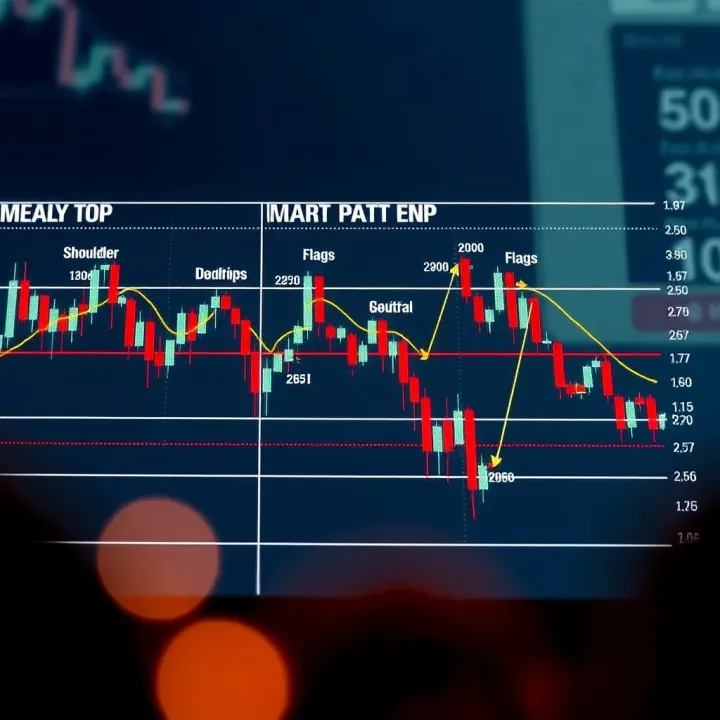
Chart patterns are not foolproof, but they offer practical clues that improve the odds of profitable trades when combined with risk management.
Prices rarely move in straight lines. Instead, they shift in waves, reflecting traders’ psychology and market sentiment. Chart patterns capture these waves, highlighting key shifts in demand and supply:
Trend continuation patterns suggest the current market direction will persist.
Reversal patterns signal a likely change in trend.
Consolidation patterns reflect indecision before a breakout.
Mastering these can help avoid costly emotional trades common in Nigerian markets during hype seasons, ember months, or political cycles.
Consider the "Head and Shoulders" pattern — a classic reversal sign. Suppose Nigerian bank shares surge steadily, then form three peaks with the middle peak highest. This might indicate sellers are gaining strength, hinting at a downturn soon. Traders could use this to exit before prices fall, avoiding losses.
Similarly, a "Cup and Handle" pattern often precedes bullish moves. A commodity stock slowly climbs, dips briefly forming the 'handle,' then breaks higher. Nigerian investors spotting this can plan buy entries anticipating gains.
Pattern recognition simplifies complex price movements into actionable signals. For Nigerian traders juggling between sectors like banking, oil & gas, or fintech stocks, these visuals provide clarity amid market noise. Armed with this cheat sheet, you’ll approach charts with greater confidence, ready to spot promising trades fast and effectively.
Chart patterns provide a visual way to understand market behaviour and price movements. For Nigerian traders, mastering these patterns is like learning the language of the market. Recognising common formations on price charts helps investors anticipate where prices could head next, offering a strategic edge in trading decisions.
Chart patterns are distinct shapes made by price movements on a stock, commodity, or currency chart over time. These configurations appear repeatedly across different markets and timeframes, signalling potential shifts like trend reversals or continuations. For example, a trader might spot a "double top" pattern, which often suggests the end of an uptrend and possible price decline.
Beyond mere shapes, chart patterns encapsulate collective trader behaviour and emotions. They reflect how optimism, fear, and indecision play out in buying and selling. A pattern like a "head and shoulders" illustrates a battle between bulls and bears, showing where momentum wanes and sellers might take control. Understanding this psychological factor equips you to read the market more like a seasoned insider than a bystander.
One key use of chart patterns is predicting price direction. By identifying a pattern early, traders can position themselves to benefit from upcoming moves. For instance, a "flag" pattern typically signals a brief pause before the current trend resumes. Spotting this allows you to trade with the trend rather than against it.
Moreover, chart patterns help pinpoint entry and exit points. Instead of guessing, you can set precise buy or sell levels based on the pattern’s structure. Take the "triangle" pattern—when price breaks out of the formation, that moment often marks a good point to enter or exit a trade, managing risks better.
However, chart patterns have their limits. They do not guarantee outcomes nor work equally well in every market situation. In Nigeria, low liquidity and sudden news events can cause false breakouts or distort patterns. That’s why it’s crucial to combine patterns with other tools like volume or moving averages, and to always use stop-loss orders to protect your capital.
Remember, chart patterns are signals—not certainties. Use them as part of a balanced trading approach.
In essence, understanding chart patterns helps Nigerian traders decode market moves, manage risks effectively, and make informed, timely decisions in a fluctuating market environment.
Reversal patterns are valuable tools in technical analysis. They signal when a prevailing trend is likely to end and a new one begin, saving traders from holding on to losing positions or missing profit opportunities. For Nigerian traders facing volatile markets, spotting these patterns early can make the difference between a decent return and a costly loss.
The head and shoulders pattern consists of three peaks: the middle peak (the head) is the highest, flanked by two lower peaks (shoulders) on either side. These form after a sustained uptrend and usually indicate a top is near. The neckline is drawn by connecting the lows between the shoulders. This pattern looks like a person’s head and two shoulders, hence the name.
Typically, it forms over days or weeks, and its shape reflects sellers gradually overpowering buyers. Nigerian traders might see this pattern emerge on stocks actively traded on the NGX, especially when price rallies are met with weakening momentum.
Once the price breaks below the neckline with increased volume, it usually confirms the reversal, suggesting the uptrend has ended. Traders often use this breakdown to enter short positions or exit long ones. For instance, if a popular banking stock forms this pattern, breaking the neckline could signal investors to lock in profits before the price drops further.
However, false breakouts happen, so volume confirmation is key. Without a surge in selling volume, the pattern may fail, and the price could resume climbing.
Double top and double bottom patterns appear as two distinct peaks or troughs at roughly the same price level. The double top resembles an 'M' shape, indicating resistance levels where price struggles to break higher. Conversely, the double bottom looks like a 'W', signalling support where price resists dropping further.
In Nigerian markets with low liquidity, these patterns can be especially prominent during ember months when trading volume dips, making price swings clearer to spot.
The key signal is price breaking the neckline (support for double top, resistance for double bottom) after the second peak or trough. This breakout confirms the trend reversal. For instance, a double bottom forming in a commodity stock on NGX, followed by a breakout above resistance, can be a good entry point for a long trade.

Watch for volume spikes at breakout points; low volume breakouts often mislead traders, resulting in whipsaws.
The inverse head and shoulders pattern is a flipped version of the regular head and shoulders. It forms after a downtrend, signalling a potential bullish reversal. Instead of peaks, there are three troughs; the middle trough (head) is the lowest, with higher troughs (shoulders) on the sides.
This pattern shows that sellers are losing strength, and buyers might soon take control. Nigerian traders looking at blue-chip stocks or active forex pairs often find the inverse head and shoulders a reliable signal to prepare for price rallies.
To trade this pattern, identify the neckline by joining the highs between the troughs. A decisive breakout above the neckline with rising volume confirms the reversal. Traders usually enter long positions at this breakout and place stop-loss orders below the right shoulder to manage risk.
For example, if a major consumer goods stock forms this pattern during market dips, a confirmed breakout can signal a good buying opportunity. Always combine pattern signals with other indicators like RSI or moving averages for higher accuracy.
Recognising common reversal patterns like head and shoulders or double tops helps traders avoid traps and time their entries to maximise gains, especially in Nigeria’s sometimes erratic market environment.
By understanding these reversal patterns, Nigerian traders can improve their timing and reduce unnecessary risks, making technical analysis a practical part of their trading toolkit.
Continuation patterns are chart formations that suggest the current trend—whether up or down—is likely to continue after a brief pause or consolidation. For Nigerian traders, recognising these patterns can prevent premature exits during a temporary slowdown and help position for the next leg of the move.
When you spot a continuation pattern, it indicates traders are gathering strength or waiting for fresh momentum before pushing prices further in the existing direction. That makes them especially valuable in markets like the Nigerian Exchange (NGX), where volatility can create false reversals. Spotting these correctly can lead to better-timed entries and more confident trade management.
Flags and pennants appear after a strong price move, usually sharp and decisive. A flag looks like a small rectangle slanting against the main trend, formed by parallel trendlines. A pennant, on the other hand, resembles a small symmetrical triangle or wedge formed by converging trendlines. Both patterns reflect a brief pause where price consolidates but within a tight channel.
These patterns show market indecision before continuation resumes. For instance, after a sudden jump in MTN Nigeria’s share price on strong earnings, the price may pause forming a flag as traders catch their breath. This pause helps confirm the previous move was not exhaustion but a breather for more gains.
The profit target for flags and pennants usually equals the length of the prior price move (the flagpole). For example, if the price rose ₦50 before entering a pennant, expect a similar upside upon breakout.
This method guides realistic expectations. When Oando’s stock pauses with a flag pattern during an uptrend, traders can measure the height of the initial surge to project the next price target. Always use a stop-loss below the consolidation area to limit risk if the breakout fails.
Triangles show price compression and signal a possible breakout. An ascending triangle has a flat resistance line at the top with rising lows pushing against it—often bullish. A descending triangle has a flat support at the bottom with lowering highs and is often bearish. Symmetrical triangles feature converging trendlines with both highs and lows moving toward a point, suggesting indecision.
Understanding these shapes matters because their breakout direction aligns with market pressure. If Nigerian bank stocks form an ascending triangle amid positive sector news, the likely breakout is upward, signalling buying opportunities.
Effective trading requires waiting for a confirmed breakout, ideally with above-average volume for credibility. Premature entries before breakouts from Symmetrical or Descending triangles may lead to losses.
For instance, when Zenith Bank forms a symmetrical triangle during sideways trading, watch for a close above resistance or below support accompanied by volume before committing funds. Trade size and stop-loss placement should reflect the pattern's size and volatility to manage risks well.
Rectangles mark periods where prices move within well-defined support and resistance levels, often sideways. This price consolidation means buyers and sellers battle without clear dominance.
In Nigerian markets, illiquid stocks often form rectangles as trading volume dries up, causing choppy price action between two levels. Recognising these helps traders avoid jumping in too soon or mistaking sideways movement for trend reversals.
Traders often buy near the rectangle’s support line and sell near resistance to capture short-term gains. Confirming a breakout beyond these boundaries with volume signals a new trend start.
For example, if Dangote Cement’s share price has lingered between ₦240 and ₦260 for weeks (a rectangle), a break above ₦260 on good volume can trigger a buying opportunity. Using this strategy avoids holding through prolonged sideways moves, improving capital allocation.
Remember, no pattern guarantees success. Always combine chart patterns with volume and other indicators for confirmation, manage risk with stop-loss orders, and adjust strategies for Nigeria’s market quirks like low liquidity and volatility fluctuations.
By mastering these continuation patterns, traders can ride trends longer, improve entry timing, and avoid common pitfalls in the Nigerian trading environment.
Volume plays a critical role in confirming chart patterns, making it easier to distinguish genuine signals from mere price movements. It reflects the market's actual interest and participation, which can reinforce the reliability of a pattern. When combined with other technical indicators like moving averages and the Relative Strength Index (RSI), volume offers a more robust foundation for making trading decisions in the Nigerian markets, where liquidity and volatility vary widely.
Volume tends to increase during price breakouts and reversals, signalling strong trader commitment. For example, during a head and shoulders reversal, a surge in volume at the breakout confirms that sellers are taking control. Without volume support, the breakout might be weak and prone to fail. Likewise, in continuation patterns like flags or pennants, volume often declines as the chart consolidates, then spikes on breakout to confirm the price move.
Paying close attention to volume helps traders avoid false signals from patterns formed on thin trading activity. A low-volume breakout on the Nigerian Stock Exchange (NGX) could simply reflect market noise rather than genuine trend change, especially in smaller-cap stocks with less daily turnover.
Watch for volume spikes coinciding with key pattern points such as breakout or breakdown levels. A volume surge suggests that many traders agree on the price direction, increasing the chance of a sustained move. Conversely, declining volume during a rally may warn of a weakening trend.
In trading volatile pairs or equities common in Nigeria, an abnormal increase in volume could also indicate institutional activity or news-driven moves, offering strategic trade opportunities. Volume divergence, where price advances but volume decreases, often precedes reversals, providing an early warning.
Moving averages smooth out price data to highlight the general trend direction. When used alongside patterns, they confirm entry or exit points. For instance, a bullish breakout above a resistance line accompanied by a crossing of the 50-day moving average above the 200-day moving average (golden cross) tends to strengthen the buy signal.
The RSI, which measures overbought or oversold conditions, adds further context. An RSI below 30 near a pattern’s reversal point can suggest a forthcoming rally. Nigerian traders can combine these with volume signals for confirmation before committing capital.
Relying solely on price patterns without confirmation often leads to losses. False breakouts are common in markets with sporadic liquidity, like some sectors in Nigeria. Indicators like moving averages and RSI help filter these out.
For example, if price breaks out of a triangle but the RSI remains neutral and volume is low, it’s safer to wait for more evidence before entering. Combining multiple indicators reduces the chance of jumping into trades based on misleading chart patterns.
Using volume and technical indicators together offers a fuller picture of market sentiment, guiding smarter, more confident trading decisions that respect the complexity of Nigerian markets.
In summary, integrating volume with moving averages and RSI makes chart patterns in trading far more reliable. Nigerian traders benefit from this approach, navigating local market quirks with a sharper edge.
Understanding chart patterns is one thing, but applying them effectively in the Nigerian markets requires a clear grasp of local conditions. The Nigerian stock and forex markets often differ from global markets due to factors like low liquidity, periods of high volatility, and economic uncertainties. Knowing how to adapt your technical analysis approach to these realities can significantly improve your trading outcomes. Here we explore practical advice tailored for Nigerian traders to navigate these challenges.
Liquidity in Nigerian markets, particularly stocks outside the top tier, can be thin. This means price moves might be choppier and less predictable, making chart patterns less clean than what you might see in developed markets. For example, a common pattern like a double top may fail to fully form or give false signals when buying interest is weak. Recognising this requires patience and combining chart patterns with volume analysis and fundamental news to confirm signals.
Conversely, volatility spikes can send prices hopping during ember months or political events, sometimes breaking pattern boundaries unexpectedly. Traders in Nigeria need to allow for wider price swings when setting stops or deciding on entry points, so they don’t get shaken out by typical market noise.
Because of the above factors, it's crucial to adjust your stop-loss orders deliberately. Tight stops that work in more liquid markets may trigger too early here, leading to avoidable losses. Many Nigerian traders prefer setting stops a bit further away based on Average True Range (ATR) or recent price swings to accommodate local price behaviour.
For instance, when trading shares on the Nigerian Exchange (NGX) with typically wider spreads, placing your stop less than 2% away might be unwise. Instead, giving a 3–4% buffer can avoid exits caused by normal market jitters. This does increase risk, so managing position size becomes essential.
Simply spotting a chart pattern isn’t enough. In Nigeria, ignoring volume data while trading patterns is a common misstep. Volume helps confirm if a breakout or reversal has strength. A pattern breakout on very low volume often turns out false because few traders back it.
For example, a flag pattern breakout from a Nigerian bank’s share might look promising, but if the volume is below average, it’s better to hold off or use additional indicators like moving averages before entering.
With the emotional ups and downs in local markets, some traders rush into trades as soon as they detect partial patterns. This impatience leads to overtrading and losses. Patterns must be clearly defined and confirmed. Rushing into every potential signal wastes capital and can blow up portfolios quickly.
The thing is, not every zigzag is a valid pattern. Take time to wait for the pattern to fully form. For instance, wait for the second high in a double top before entering a short position rather than acting on the initial peak.
A smart trader balances potential reward against risk. In Nigerian markets, aiming for a risk-reward ratio of at least 1:2 is advisable. That means for every ₦1 risked, you target ₦2 in profit. This approach helps you stay profitable even if only half your trades succeed, which suits the local environment where unexpected moves occur.
Traders should also consider market timing, such as avoiding major events when risk spikes.
Charts are not just for entry signals; they guide stop placements, target levels, and risk management. Nigerian traders benefit from marking support and resistance zones clearly and planning trades around them. For example, if a rectangle pattern shows resistance near ₦50 and support at ₦45, planning your exit just before ₦50 allows gains without waiting for perfect tops.
Careful trade planning also involves tracking the trade progress and adjusting stops to lock profits as price moves favourably. This disciplined use of charts helps safeguard capital and optimise returns amid Nigerian market unpredictability.
Practical trading in Nigerian markets demands a blend of technical know-how and awareness of local quirks like liquidity and volatility. Combining chart patterns with volume confirmation, sensible stop adjustments, and risk-aware planning will help turn your analysis into better trading results.
📈 Learn seven key chart patterns traders use to spot market moves. Understand structure, tips for reading charts, and where to find handy PDFs for quick study.

📈 Master all candlestick patterns in trading with our detailed guide. Learn how market moves shape signals for better trading decisions. Suitable for every trader.

📉 Learn to spot bearish candlestick patterns that signal market dips. Boost your trading skills with clear insights tailored for Nigerian traders! 🇳🇬

Learn how bearish reversal candlestick patterns signal price drops in trading 📉. Gain practical tips to spot trends and trade smarter in Nigeria’s markets.
Based on 13 reviews