

Complete Guide to Candlestick Patterns in Trading
📈 Master all candlestick patterns in trading with our detailed guide. Learn how market moves shape signals for better trading decisions. Suitable for every trader.
Edited By
Sophie Turner
Chart patterns form the backbone of technical analysis in trading and investing. They offer practical clues about future price movements by analysing how prices behave over time on charts. For traders and investors operating in Nigeria's dynamic markets, recognising these patterns can sharpen decision-making and enhance timing for entry or exit.
Understanding chart patterns is not just about spotting shapes; it's about interpreting the market psychology embedded within these formations. For example, a head and shoulders pattern often signals a potential trend reversal, while a ascending triangle might indicate a continuation of an upward trend. These visual patterns summarise buying and selling power battles and help predict probable price behaviour.

Practical application goes beyond textbook definitions. Take the Nigerian equities market: spotting a double bottom during a bear phase might guide a trader to prepare for a bullish bounce. Similarly, recognising a flag pattern in forex pairs like USD/NGN can suggest a short-term price consolidation before continuation.
As you proceed, having reliable PDF resources can make a big difference. These PDFs from reputable financial platforms and trading educators offer detailed diagrams, examples, and trading strategies. Beyond just reading, practice by marking real charts using Nigerian market data to build intuition.
Chart patterns are visual roadmaps to price action, not guarantees. Always combine pattern recognition with volume analysis, market context, and risk management for better outcomes.
This guide will introduce you to essential chart patterns, practical tips for spotting them on local market charts, and where to access quality PDFs to deepen your understanding. Mastering these will help you trade smarter and invest with more confidence in the Nigerian market scene.
Chart patterns serve as visual representations of historical price movements on financial instruments, helping traders and investors anticipate potential future trends. In Nigerian markets, where price volatility can be sharp and sudden, recognising chart patterns can provide an edge in making timely decisions. For example, spotting a 'head and shoulders' formation early on the Nigerian Stock Exchange (NSE) could signal an impending reversal, allowing traders to adjust their portfolios and minimise losses.
Chart patterns aggregate the psychology of market participants, reflecting shifts in supply and demand over time. They capture moments when buyers or sellers dominate, pause, or lose momentum. For instance, a double bottom pattern often marks a strong support level where selling pressure fades, and buyers step in to push prices up. This pattern can be observed in the price history of some popular Nigerian stocks like Dangote Cement during phases of market consolidation.
These patterns are not just random shapes; they tell stories of struggle between bulls and bears. A rising wedge might indicate weakening upward momentum despite price increases, suggesting caution. By studying chart patterns, traders decode the market’s behaviour without relying solely on news or external factors.
Chart patterns simplify complex market data into manageable signals that guide entry and exit points. In fast-paced environments such as Forex trading with the naira-dollar pair or cryptocurrency markets like Bitcoin on Nigerian exchanges, relying on real-time price action alone is challenging. Patterns help traders to anticipate moves rather than react after the fact.
Take the flag pattern, for example. After a sharp price rise, the market consolidates within a narrow range. This often precedes a continuation of the trend. A Nigerian trader noticing this can prepare to buy before the next surge, potentially increasing profits.
Beyond profit, chart patterns assist risk management. They highlight critical support and resistance levels, enabling traders to set stop-loss orders more effectively. This practical use protects investments from sudden market shocks common in local currency fluctuations or commodity price shifts.
Recognising and understanding chart patterns equips traders with a visual language to interpret markets. It empowers better judgment and timely decisions, crucial for navigating the often unpredictable Nigerian financial scenes.
By mastering chart patterns, you blend art with science — interpreting price movements with a strategic eye to improve trading outcomes locally and beyond.
Every trader benefits from recognising common chart patterns because these formations give insight into what the market might do next. Whether you're dealing with stocks listed on the Nigerian Stock Exchange or forex on electronic platforms, understanding these patterns helps to time entry and exit points better. Pattern recognition often acts like a trader’s roadmap, showing potential reversals or continuations in price movements.
Head and Shoulders is one of the most reliable reversal patterns signalling a possible trend change. It forms when price peaks twice on either side of a higher peak, resembling a head with two shoulders. Traders spot this pattern to anticipate a decline after an uptrend, often confirming the signal with a drop below the neckline support. For example, if Dangote Cement’s stock shows this pattern, it might warn investors to brace for an upcoming correction.
Double Top and Double Bottom patterns also point to market reversals. A double top occurs when prices test resistance twice without breaking through and then fall, suggesting selling pressure is rising. Conversely, a double bottom forms with two failed attempts to break below support, hinting at a bullish reversal. These patterns are straightforward and help traders act before the market swings strongly, which can be handy when trading Nigeria's volatile petroleum stocks.
Triple Top and Triple Bottom act like extended forms of double tops and bottoms but with an extra confirmation. They test key resistance or support levels three times, indicating strong barriers for price movement. When the price finally breaks such a level, the resulting move is often more decisive. Traders wait for such breaks to confirm shifts in trends, especially during bearish or bullish phases in forex pairs like USD/NGN.
Triangles—ascending, descending, and symmetrical—are common continuation patterns that reflect periods of consolidation before a trend resumes. An ascending triangle with a flat resistance and rising support often hints at a bullish breakout, while a descending triangle suggests bearish continuation. Symmetrical triangles can go either way, so volume plays a big role in confirmation. For example, an ascending triangle developing in Access Bank's stock chart could prompt traders to expect further upward movement.

Flags and Pennants appear as short-term consolidation phases resembling small rectangles or miniature triangles that slope against the prevailing trend. They indicate brief pauses before the original trend gains steam again. Traders often look out for sharp price moves preceded by these patterns to ride quick profits, especially useful in fast-moving forex markets.
Rectangles happen when price moves sideways in a range, bouncing between clear support and resistance levels. They signal indecision before a breakout in either direction. Nigerian traders watch these to spot breakouts that could announce new trends, such as an NSE stock shifting after weeks of range-bound trading.
The Cup and Handle pattern resembles a teacup shape followed by a slight consolidation (the handle). It usually points to a bullish continuation after a long correction. This formation can take weeks or months to develop, offering traders a clear buying opportunity once the handle’s resistance breaks. Such patterns can be spotted in big Nigerian stocks like MTN Nigeria when they pause to gather strength.
A Rounding Bottom forms a smooth 'U' shape over time, representing a gradual shift from selling to buying pressure. This pattern signals a deep but steady reversal, often followed by significant upward trends. Traders in Nigerian markets like to spot this on long-term charts to identify promising buy points for foundational stocks or ETFs.
Lastly, Wedges are sloping triangles where both support and resistance lines move in the same direction. Falling wedges typically predict bullish reversals, while rising wedges often warn of bearish turns. Nigerian traders combine wedge patterns with volume analysis to improve their timing, especially when dealing with high-volatility sectors such as oil services.
Knowing these common chart patterns sharpens your ability to understand market psychology and price behaviour. Using them alongside volume and support levels can make your trading approach more precise and less risky.
Reading chart patterns effectively goes beyond recognising their shapes; it requires understanding the context in which they occur, the price action driving them, and the volume supporting the movements. For traders and investors in Nigeria, mastering this skill can mean the difference between seizing a good opportunity and making costly mistakes.
Volume confirms the strength behind price moves. For instance, a head and shoulders pattern signalling a reversal in the NSE All-Share Index is more reliable if accompanied by higher trading volume on the breakout day. Low volume may suggest a false signal or limited conviction among market participants. Combining volume with price action helps you avoid decisions based on isolated patterns; instead, you read the market's story holistically. If a flag pattern appears during a strong upward trend but volume dries up, it could signal trend exhaustion rather than continuation.
Support and resistance levels act as guardrails for price movement and help validate chart patterns. Imagine spotting a double bottom pattern around ₦100 per share for a Nigerian bank stock listed on the NSE. If this bottom aligns with a significant historical support level, the likelihood of a genuine reversal increases. Conversely, if the breakout from a triangle pattern occurs far from any known resistance level, the pattern’s predictive value weakens. Use tools or platforms that show historical price levels clearly and verify if the pattern coincides meaningfully with these zones.
Confirming patterns with volume and key price levels gives you an edge, reducing guesswork in trading.
Many traders jump at patterns without context, leading to false entries. Common errors include:
Ignoring volume: A pattern that forms with weak volume seldom holds.
Forcing patterns: Sometimes price action looks like a pattern only because one wants to see it. Be objective.
Overtrading based on partial patterns: Incomplete formations can mislead, like entering before the neckline breaks in a head and shoulders.
Neglecting market conditions: Patterns in sideways or low-liquidity markets, common in some Nigerian stocks, may not emerge strongly.
Avoid these by always cross-checking patterns with other indicators or market news. For instance, a gummy pattern during Nigeria’s ember months, when market liquidity often dries up, demands extra caution.
Understanding how to read and interpret chart patterns properly equips you to make smarter trades in Nigeria’s evolving financial scene. Keep volume, support, and resistance in clear view, and always be wary of pattern pitfalls, and your trading decisions will carry more confidence and precision.
Gaining access to dependable chart pattern PDFs is a practical move for traders, investors, and analysts who want to deepen their understanding of price movements. Reliable PDFs consolidate vital information into easily digestible formats, helping you revisit key concepts without wading through endless articles or videos. For Nigerian traders, this approach also safeguards against misinformation, a risk when relying solely on social media or informal sources. Secure, quality PDFs enable consistent learning, making it simpler to track progress and sharpen trading decisions.
Numerous international and Nigerian financial websites offer free and paid PDFs centred on chart pattern education. Platforms like Investopedia provide comprehensive foundational materials that explain patterns such as head and shoulders or triangles. On the Nigerian side, fintech companies like Cowrywise and Kuda have educational sections where users can download guides tailored to local market conditions.
These sources matter because they often combine theory with current Nigerian market examples. For instance, a PDF from a Nigerian fintech might illustrate how a double top influenced a sharp price drop in a stock listed on the Nigerian Stock Exchange (NSE). Such context makes learning relatable and actionable.
Beyond formal educational sites, Nigerian investment forums like Nairametrics and MoneyCentral offer user-shared PDFs and technical notes. Blogs written by seasoned Nigerian traders sometimes bundle their insights into downloadable documents covering chart pattern trades specifically within Nigerian equities, forex, or cryptocurrency markets.
These platforms provide practical experiences often missing from global content. For example, a blog post might explain how to read a pennant pattern during volatile fuel subsidy announcements and include a PDF checklist for quick reference. They’re a good way to keep updated on market sentiment and real-time pattern recognition tips.
Simply reading PDFs isn’t enough. Boldly marking up these documents enhances retention and understanding. Highlight breakout points, annotate volume shifts, or draw arrows next to critical resistance or support levels. This active engagement makes your study session more reflective of actual chart reading on trading platforms.
Including exercises like sketching your own versions of familiar patterns or testing predictions based on sample charts can transform passive reading into hands-on practice. Over time, this cultivates pattern recognition speed and accuracy, crucial for fast-moving Nigerian markets.
The true power of learning from PDFs shines when you pair reading with real-time chart analysis. Open your preferred platform—say, the NSE portal or MTN Nigeria’s stock on a trading app—and try locating patterns discussed in your PDF resources.
This combination bridges theory and practice. For instance, spotting an ascending triangle in your PDF then confirming it on NGX-listed stocks reinforces understanding. Also, tracking how volume changes align with pattern formations on live charts helps you grasp the nuances beyond textbook definitions.
Building a personalised PDF library ensures you have instant access to essential patterns and annotations whenever you need a refresher. Organise your collection by pattern type, trading instrument, or even by market conditions like bear or bull phases common in Nigerian markets.
Keep updating your folder with new PDFs from credible sources or your own annotated notes. This living reference will save time during active trading periods and improve confidence in making rapid decisions amid market fluctuations.
Consistently using quality PDF resources tailored to your trading style and local conditions puts you ahead in recognising profitable opportunities and avoiding common pitfalls in chart pattern analysis.
This way, Nigerians engaged in trading can leverage a structured, ready-to-use reference that matches the dynamism of their markets and wallets alike.
Understanding and applying chart pattern knowledge in Nigerian financial markets offers traders and investors a real edge. The Nigerian Stock Exchange (NSE) has its unique behaviours affected by local economic policies, corporate actions, and market sentiments. Chart patterns help decode these price movements, enabling you to anticipate potential trends before they become obvious. For instance, recognising a head and shoulders pattern on a blue-chip stock like Dangote Cement could warn you about a possible trend reversal, helping you protect your investments.
When trading Nigerian stocks, chart patterns reveal crowd psychology specific to the local context. Many investors respond sharply to earnings reports, CBN regulatory announcements, or changes in fuel subsidy policies. These events can trigger well-defined reversal or continuation patterns. Traders who spot an ascending triangle on MTN Nigeria’s chart may expect the price to break upwards, riding on strong demand backed by subscriber growth. Conversely, double top patterns in sectors like banking can signal profit-taking after price rallies caused by industry-wide events.
To capitalise on these patterns, watch closely for volume confirmation alongside price action. Nigerian markets tend to be more volatile during earnings seasons or political announcements, making timely entry and exit points vital.
Forex and cryptocurrency trading are booming in Nigeria thanks to accessible platforms like Binomo, Binance, and local brokers. Chart patterns serve as critical tools here too. Given the high volatility in forex pairs involving the naira and major currencies, you can track flag patterns or pennants signaling brief consolidations before sharp moves. For crypto, patterns like cup and handle may point to strong rallies in coins like Bitcoin or Ethereum, especially around global market events or regulatory news impacting Nigerian traders.
It’s essential to combine pattern recognition with understanding the broader macroeconomic environment, such as CBN’s forex intervention or crypto regulation developments.
Not all textbook patterns apply identically in Nigeria. Factors like lower liquidity, informal trading activities, and frequent market interruptions mean you should adjust your pattern strategy. Nigerian markets often show false breakouts due to rapid profit booking or sudden news. To manage this, combine chart patterns with other tools like support/resistance levels unique to Nigerian stocks or currency charts.
Also, consider the timing of events like the ember months when increased trading activity can exaggerate volatility, affecting pattern reliability. Being aware of these nuances sharpens your interpretation and helps you avoid common pitfalls.
Successful application of chart patterns in Nigeria hinges on blending technical skills with local market awareness. This combination helps traders make more informed, timely decisions in an often unpredictable market environment.
Through practical use and constant observation, you can sharpen your skillset and boost your chances of profitable trades using chart patterns tailored for Nigeria’s financial markets.
📈 Master all candlestick patterns in trading with our detailed guide. Learn how market moves shape signals for better trading decisions. Suitable for every trader.

Learn essential candlestick patterns for smarter trading 📈. Access a detailed PDF guide with 35 key patterns to refine your market strategies today!
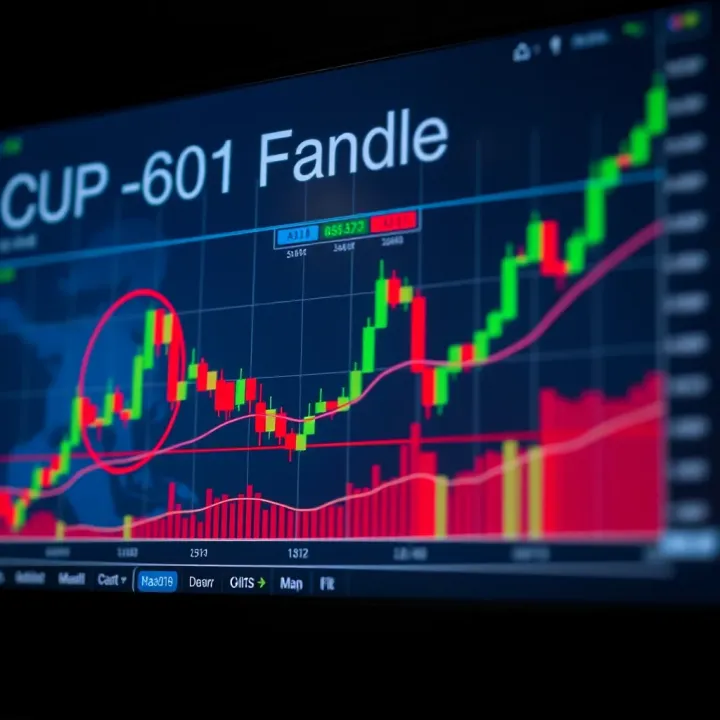
📈 Learn seven key chart patterns traders use to spot market moves. Understand structure, tips for reading charts, and where to find handy PDFs for quick study.

📱 Discover the best trading apps in Nigeria! Learn features, safety tips, and how to trade smartly with mobile platforms made for Nigerian investors. 🇳🇬
Based on 8 reviews