

Managing Forex Risk for South African Businesses
Managing forex risk is vital for South African businesses trading abroad. Learn how to minimise exposure with practical tools, sound controls, and local regulations 📉🌍
Edited By
David Sinclair
Financial risk management involves spotting, measuring, and dealing with uncertainties that could affect an organisation’s capital and profits. In South Africa, these risks range from global market shifts to very local challenges like Eskom’s loadshedding and rand volatility.
Understanding types of financial risks helps businesses and investors respond effectively. Some main risk types include:

Market risk: changes in interest rates, exchange rates, and stock prices impact investments.
Credit risk: the chance that borrowers or counterparties won’t meet their obligations.
Liquidity risk: difficulty in converting assets to cash without significant loss.
Operational risk: failures in systems, processes, or external events disrupting business.
South African markets bring specific concerns. For instance, unexpected loadshedding disrupts operations and affects cash flows, while the rand’s swings due to commodity prices or political events can influence profitability and foreign investment.
Managing these risks calls for a blend of traditional strategies and an appreciation of local contexts, such as regulatory compliance with the Financial Sector Conduct Authority (FSCA) and understanding currency control guidelines.
Effective risk management relies on clear frameworks and practical tools. These might include scenario analysis to simulate loadshedding impacts on cash reserves or using hedging instruments to protect against rand depreciation.
This article will unpack strategies relevant to traders, investors, analysts, and educators working within South Africa’s unique environment. The aim is to equip readers with insights that support better decision-making and more resilient financial planning.
Understanding financial risk is a cornerstone for anyone involved in the South African markets. Risk, in simple terms, refers to the chance of losing money or encountering unexpected negative outcomes in investments or business activities. Grasping the nature and variety of financial risks helps traders, investors, and analysts make informed decisions that can protect capital and improve returns.
Financial risk involves any uncertainty that may lead to financial loss. This could be due to market movements, default by a borrower, operational failures, or changes in laws and regulations. It's not just about losing money; it's about measuring how probable that loss is and its potential impact, so strategies can be built around managing or reducing this risk.
Market Risk involves the possibility that the value of investments will fall due to changes in market variables such as interest rates, commodity prices, or equity markets. For example, South African equities listed on the JSE may underperform if global commodity prices decline or if inflation jitters affect investor sentiment. Traders closely watch these signals to adjust positions and limit exposure.
Credit Risk arises when a borrower or counterparty fails to meet their obligations. Say a local business extending credit to a supplier finds the supplier unable to pay back during tough economic times; that’s credit risk realised. Banks and lenders in SA use credit scoring and ongoing monitoring to minimise such impacts.
Liquidity Risk is the challenge of selling an asset quickly without significant loss in value. A small cap share on the JSE might be hard to sell rapidly during volatile markets, forcing investors to accept lower prices or wait longer, which can be costly if immediate cash is needed.
Operational Risk relates to failures in internal processes, people, or systems. For example, a software glitch disrupting electronic trading platforms or fraud activities within a financial institution can cause significant financial damage. Given South Africa’s evolving regulatory landscape, firms must bolster internal controls continually.
Legal and Regulatory Risk includes potential losses due to non-compliance with laws or regulatory changes. Changes in South African legislation, like updates to the Financial Advisory and Intermediary Services (FAIS) Act, can impact how firms operate and necessitate quick adaptations to avoid penalties.
Eskom Loadshedding Impact significantly strains business continuity. Frequent power cuts can disrupt trading systems, production lines, or cash flow operations, causing direct losses and increased costs as firms invest in backup generators or solar solutions.
Currency Fluctuations (Rand Volatility) are a major headache for businesses exposed to imports or exports. The rand’s swings against major currencies like the US dollar can quickly erode profit margins or increase costs, complicating forecasting and pricing decisions.
Political and Economic Uncertainty in South Africa often leads to market jitters. Issues like policy shifts, labour unrest, or local elections can affect investor confidence, causing stock volatility or slowing business expansions. Understanding this risk helps market players time their moves with greater wisdom.
Recognising and understanding these financial risks lays the groundwork for effective risk management tailored to South Africa’s unique economic environment.
This foundational knowledge arms traders and investors with insight to navigate complexities and protect their financial interests in a dynamic market.
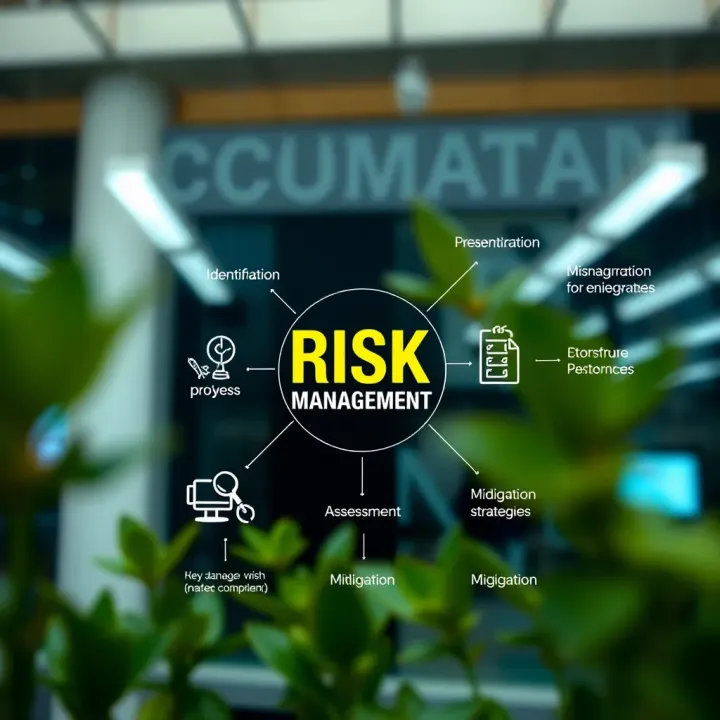
Effective financial risk management hinges on solid principles and frameworks. These create a structured approach to identifying, measuring, and controlling risks specific to the South African market, where factors like rand volatility and loadshedding shape the landscape.
Risk identification acts like the eyes and ears of any risk management process. It involves spotting potential threats that might impact financial performance or capital preservation. For South African firms, this could mean flagging exposure to fluctuating exchange rates, sudden power outages affecting operations, or credit defaults during economic downturns.
Assessment then gauges the likelihood and potential impact of these risks. Without this step, companies might either blow risks out of proportion or, worse, overlook serious threats. Practical tools include risk registers or heat maps, which visually summarise risks by severity and frequency, assisting decision-makers to prioritise attention and resources effectively.
Value at Risk (VaR) estimates the maximum expected loss over a certain period, for example one day or month, given a confidence level (commonly 95% or 99%). For instance, a trader at a Johannesburg equity desk might use VaR to quantify the worst probable loss under normal market conditions. This helps with capital allocation and regulatory compliance, especially since SARB and the FSCA take interest in these risk estimates.

Stress Testing and Scenario Analysis go beyond average conditions by simulating extreme but plausible events — like a sudden spike in Eskom’s loadshedding or a Rand plunge triggered by political unrest. Stress tests assess how portfolios or balance sheets fare under these shocks, revealing hidden vulnerabilities. Scenario analysis, meanwhile, explores a range of potential outcomes to help players prepare for less likely but impactful events.
Credit Scoring Models assign a quantitative score to assess the creditworthiness of borrowers or counterparties. Banks and lenders use these models locally to decide on credit approvals and set appropriate interest rates. These models pull data such as repayment histories, income levels, and even sector risks. They’re a key part of managing credit risk in a country where economic shifts can lead to sudden changes in borrower reliability.
Basel Accords are internationally recognised banking regulations that set minimum capital requirements and risk controls. South Africa’s banking sector aligns with Basel III, ensuring banks hold enough capital to stay afloat during periods of stress. This framework encourages prudent lending and liquidity practices, which add stability to the entire financial system.
The King IV Report on Corporate Governance stresses the importance of transparent and accountable risk management at board level. For South African companies, King IV’s principles ensure that risk isn’t just a finance function issue but a strategy part. Boards are expected to oversee risk frameworks actively, fostering an organisational culture that pays attention to both opportunities and threats.
The Financial Sector Conduct Authority (FSCA) Guidelines lay down rules for fair, accountable behaviour in financial institutions. In terms of risk, FSCA promotes proactive risk mitigation to protect consumers and maintain market integrity. This includes clear policies on conduct risks, management of conflicts of interest, and adherence to regulatory reporting.
In South Africa, applying these core principles and frameworks helps businesses navigate unique challenges like economic volatility, regulatory shifts, and infrastructure hiccups effectively. They provide more than compliance boxes to tick — they are practical foundations for resilient financial operations.
Managing financial risk effectively is essential for traders, investors, and analysts, especially in South Africa’s fluctuating economic environment. Employing the right techniques and tools reduces exposure to market shocks and enhances portfolio stability and organisational resilience. In this section, we’ll cover practical approaches from diversification to credit risk mitigation, tailored to local market nuances.
Diversification involves spreading investments across different asset classes or sectors to reduce the impact of any single loss. For example, a South African investor might balance holdings between JSE-listed equities, government bonds, and offshore funds. Asset allocation shapes how capital is distributed among these categories, aiming to optimise risk-adjusted returns.
By not putting all their eggs in one basket, investors cushion their portfolios against specific sector downturns or unexpected shocks like sudden rand volatility. Consider a fund manager who combines mining shares with fixed-income securities and some retail property trusts; losses in mining during a slump might be cushioned by steady bond returns. But diversification is not just about quantity; it requires careful balance reflecting risk appetite and market conditions.
Futures and options are financial instruments widely used to hedge against price volatility. Futures contracts oblige the buyer to purchase an asset at a predetermined price on a set date. For instance, a maize producer in the Free State might use futures to lock in prices ahead of harvest, protecting against drops in commodity prices.
Options, on the other hand, give the buyer a right—not obligation—to buy or sell at an agreed price, offering more flexibility. Investors in South African equities, nervous about sudden rand depreciation, could acquire put options as insurance to limit losses without having to sell holdings outright.
Both instruments help market participants manage downside risk but require understanding of contract terms and market liquidity, which can vary notably on the JSE derivatives market.
Swaps are agreements to exchange cash flows or liabilities; for example, interest rate swaps help companies manage borrowing costs when rates fluctuate. A South African company with a floating-rate loan might enter a swap to exchange it for a fixed rate, stabilising interest expenses amid SARB rate changes.
Forwards are like customised futures contracts traded over-the-counter and frequently used to hedge currency risk. Exporters receiving payments in US dollars often use forward contracts to fix the rand rate at settlement, shielding revenues from exchange rate swings.
Using swaps and forwards demands sound counterparty evaluation and diligent contract management to avoid unexpected credit exposures.
Credit insurance protects lenders or suppliers against losses from customers defaulting on payments. In SA’s SME sector, for example, a supplier may take credit insurance to cover invoicing local retailers at risk of insolvency due to economic downturns or load shedding that disrupts business.
This tool transfers some credit risk to insurers, improving cash flow certainty and encouraging bolder trade credit terms while helping businesses handle late payments.
Collateral management involves securing assets to back loans or credit extensions. Banks issuing home loans require bonds against property titles. Proper valuation and legal registration of this collateral safeguard lenders if borrowers default.
Particularly in South Africa’s volatile market, effective collateral management reduces credit losses and supports smoother credit flows. Firms must regularly reassess collateral values due to changing property prices or asset depreciation.
Setting credit limits involves capping the maximum exposure a lender or supplier will allow a single customer to accumulate. Regular monitoring ensures adherence and helps detect early warning signs like exceeding limits or payment delays.
In practice, insurers, commercial banks, and firms often use automated systems that flag customers approaching limits or showing deteriorating creditworthiness. This ongoing vigilance curtails bad debts and sharpens risk control.
Practical risk management tools don’t just protect capital—they enhance decision-making, boost confidence, and support sustainable growth in South Africa’s unique financial landscape.
Whichever techniques you choose, make sure they align with your risk profile, regulatory requirements, and the peculiarities of local market conditions such as loadshedding or rand fluctuations.
South Africa’s financial sector operates within a complex web of regulations aimed at protecting investors, ensuring market stability, and promoting transparency. Understanding the regulatory environment is vital for traders, investors, analysts, and brokers who want to manage risk effectively and operate confidently. Compliance isn’t just about ticking boxes—it reduces operational risks and reputational damage, especially in a market shaped by unique challenges like currency volatility and political shifts.
The Financial Sector Conduct Authority (FSCA) and the South African Reserve Bank (SARB) stand as pillars of financial oversight. FSCA focuses on market conduct, ensuring financial institutions treat clients fairly and maintain transparent practices. This watchdog role helps keep the market trustworthy, which, in turn, stabilises investor confidence.
Meanwhile, SARB manages monetary policy, curbs inflation, and oversees the banking sector’s soundness. For instance, during periods of rand volatility, SARB’s interventions can influence liquidity or interest rates, directly impacting market risks. For anyone handling investment portfolios or credit exposure, keeping an eye on SARB’s moves is crucial to adapting risk strategies quickly.
FICA aims to combat money laundering and the financing of terrorism by requiring financial institutions to verify the identity of their clients and monitor suspicious transactions. For South African firms, this means establishing robust Know Your Customer (KYC) processes and maintaining comprehensive records. Failure to comply can result in hefty fines, and worse, it exposes companies to the risk of unwitting involvement in illicit activities, which can severely damage reputation and operations.
POPIA enforces the protection of personal data held by organisations, placing clear responsibilities on companies to secure client information and process it lawfully. For financial firms, this translates to implementing strong cybersecurity measures and privacy policies. The cost of ignoring POPIA includes fines, legal actions, and loss of client trust, directly affecting business continuity and risk exposure.
King IV provides a set of governance principles encouraging ethical leadership and effective control structures. It highlights transparent reporting and accountability, which are critical for risk management. South African firms that adopt King IV principles benefit from enhanced stakeholder confidence and improved decision-making processes, helping them navigate economic uncertainties and compliance hurdles with greater resilience.
South African companies often face hurdles like limited resources for extensive compliance programmes, rapid regulatory changes, and the need to balance local and international rules. For example, smaller investment firms might struggle to fully implement risk frameworks mandated by FSCA while staying competitive.
Moreover, ongoing issues like loadshedding complicate IT infrastructure reliability, posing challenges for maintaining uninterrupted compliance systems. As the regulatory landscape evolves, firms must adopt flexible and pragmatic approaches to compliance, integrating it as part of their core risk management strategies rather than viewing it as an additional burden.
Staying ahead in the South African financial market means embracing compliance as a way to manage risk—not just as a legal obligation, but as a cornerstone of trustworthy and sustainable business.
South African businesses face a unique set of challenges that require risk management strategies tailored to local conditions. From recurring loadshedding outages to currency swings and socio-political shifts, traditional risk frameworks must evolve to stay relevant. Understanding these realities helps traders, investors, and analysts avoid pitfalls and capitalise on opportunities within the South African market.
Loadshedding imposes immediate operational risks on many businesses. Frequent power cuts disrupt production lines, data centres, and retail operations alike. Risk managers need to build contingency plans such as installing backup generators, adopting solar solutions, or rescheduling critical processes during off-peak electricity times. For example, a manufacturing firm in Gauteng might see significant losses during stage 4 loadshedding unless it invests in an uninterruptible power supply (UPS) or shifts some production to facilities with more reliable power.
Beyond electricity, ageing infrastructure and service delivery challenges affect supply chains countrywide. Risk assessments should include infrastructure outages—like water shortages or transport strikes—that can halt operations unexpectedly. Practical risk management here involves diversification of suppliers and logistical flexibility.
The South African Rand (ZAR) frequently experiences sharp fluctuations due to global commodity prices, political uncertainty, and local economic news. This volatility can affect everything from import-export costs to investment valuations. Firms active in international trade often use hedging instruments such as forwards or options contracts to shield against adverse currency moves.
For instance, an exporter relying on overseas buyers should lock in exchange rates ahead of payment dates to avoid sudden Rand weakness eroding revenues. Analysts also monitor macro indicators like SARB’s repo rate decisions and JSE market trends to anticipate shifts in economic conditions.
South Africa’s Broad-Based Black Economic Empowerment (B-BBEE) framework presents both compliance requirements and reputational risks. Companies failing to meet B-BBEE standards may lose access to government tenders or face public criticism. Risk management must include robust social governance policies and ongoing engagement with community stakeholders.
Moreover, social unrest and labour strikes are realities that affect business continuity. Embedding social risk analysis into broader strategies—through tools like stakeholder mapping and scenario planning—prepares firms for protests or disruptions tied to inequality or service delivery concerns.
Adapting risk management to South African realities isn't just about ticking regulatory boxes; it’s about building resilience amid complex local forces and global influences.
By addressing loadshedding, currency shifts, and social factors directly, financial leaders can craft strategies that safeguard capital and maintain steady growth even under pressure. The approach should be nimble, data-driven, and grounded in South Africa’s evolving socio-economic context.
Managing forex risk is vital for South African businesses trading abroad. Learn how to minimise exposure with practical tools, sound controls, and local regulations 📉🌍

🌍 Learn how communities in South Africa can reduce disaster risks through practical prevention, response, and recovery strategies that involve everyone working together.

Discover how risk management certification boosts Nigerian professionals' ability to tackle business challenges, secure careers, and protect organisations amid uncertainties 📊🇳🇬
Learn practical risk management insights 🇳🇬 for Nigerian businesses to identify, assess & handle threats, securing operations amid economic and regulatory challenges.
Based on 9 reviews