
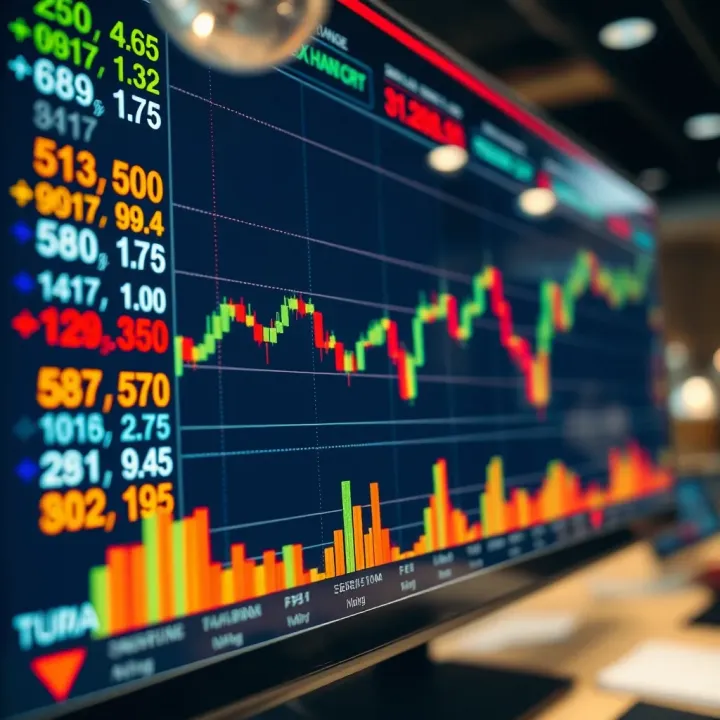
Learn Forex Trading Online: Guide for South Africans
📈 Learn how to trade forex online with tips tailored for South Africans. Master basics, spot reliable resources, use demo accounts, and manage your risks effectively.
Edited By
Henry Ashford
Forex trading, or foreign exchange trading, is the buying and selling of currencies on a global market. For South African traders, it offers opportunities to access a dynamic financial market beyond the JSE and local equities. Yet, it’s not a simple game—you need to understand how this market works and what it demands.
The forex market operates 24 hours a day, five days a week, covering regions from Asia through Europe to North America. This continuous trading means currency prices react swiftly to global events, economic data releases, and geopolitical shifts. For example, Eskom’s load shedding schedules can indirectly affect the rand’s strength during business hours.

South African traders typically engage with currency pairs like USD/ZAR, EUR/ZAR, and GBP/ZAR. These pairs are sensitive to factors like local inflation rates, SARB’s (South African Reserve Bank) monetary policies, commodity prices, and global market sentiment. Understanding these drivers can help traders anticipate price moves and manage risks better.
Forex trading is not a shortcut to quick riches—steady success lies in mastering market mechanics, risk control, and strategy development.
Accessibility: Most local brokers offer platforms with low minimum deposits, suitable for small-scale investors.
Leverage: You can control larger positions with a smaller amount of capital, but this also increases risk.
Liquidity: Forex is the world’s largest financial market, so you can buy or sell without delays.
Diversification: Trading forex can hedge exposure in other investments like stocks or bonds.
Choose the right broker: Consider regulation by the FSCA (Financial Sector Conduct Authority) to ensure your funds are secure.
Understand spread and commission: These costs impact your profitability; South African brokers vary widely.
Learn the basic tools: Platforms like MetaTrader 4 or 5 are popular for charting, analysis, and executing trades.
Develop a trading plan: Include entry and exit criteria, risk management rules, and position sizing.
Practice first: Demo accounts let you trade with virtual funds until you build confidence.
Starting with clear knowledge of the forex market’s nature in the South African context gives you an edge. From here, you can explore specific trading strategies and risk management techniques tailored to local market conditions.
Getting a solid grip on what forex trading is and how it works is the first step for anyone keen to trade currencies in South Africa. Knowing the basics lets you understand market behaviour and make informed decisions, whether you’re trading the rand against the US dollar or other global currencies. Without this foundation, it’s easy to get lost amidst the numbers and jargon.
Forex trading, simply put, involves buying one currency while selling another simultaneously. These pairs, like ZAR/USD or EUR/GBP, show how much of the second currency you get for one unit of the first. For example, if the exchange rate for ZAR/USD is 0.067, that means one rand buys 6.7 US cents. Traders aim to profit by predicting whether one currency will strengthen or weaken against the other.
Unlike shares or commodities, forex trading doesn’t deal with owning the actual physical currency. Instead, it’s purely a financial agreement based on price movements. This market is the largest and most liquid globally, with daily volumes exceeding USD6 trillion, so trades can happen instantly across different time zones.
The forex market operates 24 hours a day, five days a week. It kicks off in the Asia-Pacific session, moves to Europe, and finishes with the US session before cycling back. This nonstop rhythm means South African traders can engage at their convenience, whether during work breaks or after hours.
Liquidity — the ease of buying or selling a currency without causing big price shifts — remains high during overlap periods between major sessions, such as between London and New York. For example, trading the ZAR alongside USD or EUR usually peaks during these overlaps, giving traders better price stability and narrower spreads.
Currency prices don’t move randomly; they respond to many factors. Economic indicators like inflation rates or employment figures directly affect perceptions of a currency’s strength. In South Africa, decisions of the South African Reserve Bank (SARB) on interest rates also play a significant role. Political developments, commodity prices (particularly because South Africa is a big miner), and global risk sentiment similarly influence movement. As an example, when gold prices rise, miners’ profits tend to increase, potentially strengthening the rand.
Understanding the forex basics helps you spot opportunities and avoid common traps, especially in volatile times like Eskom loadshedding or global crises.
Each factor can cause price swings, but the trick for traders lies in reading these signals and preparing accordingly, not being caught flat-footed.
In summary, forex trading is about navigating pairs of currencies, where market hours, liquidity, and fundamental economic events affect your chances to profit. South African traders who grasp these details stand a better chance of making smart, timely decisions rather than guessing blindly.
Trading forex without the right tools and platforms is like trying to braai without fire – possible, but unnecessarily tough and inefficient. For South African traders, having reliable, well-regulated tools can make all the difference in execution speed, accuracy, and risk control.
One of the first pieces of the puzzle is choosing a trustworthy forex broker. The Financial Sector Conduct Authority (FSCA) is the watchdog here – they license and regulate brokers to make sure they operate fairly and transparently. You want a broker registered with the FSCA because that means they follow local rules designed to protect traders’ money and personal data. For example, FSCA-regulated brokers have to keep client funds separate from their own, which reduces risks if the broker faces financial trouble.
Trading costs also deserve close attention. Brokers typically charge spreads—the difference between the buy and sell price of a currency pair—which can vary widely. A spread of 1.5 pips on EUR/USD might sound small, but it adds up quickly over many trades. Some brokers charge commissions on top of spreads, so you want to factor those costs in. Lower trading costs mean you keep more of your profits. This matters in South Africa, where currency volatility can be high and small costs can eat into tight trading margins.
Metatrader 4 (MT4) and Metatrader 5 (MT5) remain staples for forex traders worldwide, including in South Africa. These platforms offer a broad range of tools for charting, technical analysis, and order execution. Many brokers provide these platforms because they’re familiar and reliable. MT5, for example, supports more advanced order types and more financial instruments compared to MT4, so as your skills grow, you might prefer MT5. Broker-specific platforms, however, sometimes offer unique features like integrated news feeds or proprietary indicators that can enhance your trading experience.
Mobile trading apps are not just a convenience; they’re essential for staying connected to the market in today’s fast-moving environment. Apps let you monitor positions, set alerts, and execute trades from anywhere – a taxi, a lapa braai, or the office. Many brokers provide apps with real-time data and secure access, letting traders respond quickly to sudden market moves, especially important during volatile sessions influenced by global news or SARB announcements.
Choosing well-regulated brokers and reliable platforms protects your capital and ensures you keep pace with the market. In the South African context, where market swings can be sharp, good tools aren’t just nice to have—they're vital for smart trading.
Look for FSCA regulation to safeguard your trading funds.
Compare spreads and commissions carefully; small differences affect profits.
Use trusted platforms like MT4 or MT5 for flexibility, or explore innovative broker platforms.
Download and get comfortable with mobile apps to trade on the move.
Armed with the right broker and platform, you’re well set up to tackle forex trading in South Africa's unique market conditions.
Having a solid trading strategy is the backbone of successful forex trading. Without a clear plan, traders risk making impulsive decisions that can quickly drain their capital. Developing strategies helps you stay disciplined, manage risks effectively, and react systematically to market changes. It’s not just about predicting where prices will go; it’s about setting clear rules on when to enter and exit trades, how much risk to take, and which indicators to trust. For example, a South African trader focusing on the rand (ZAR) might combine economic news with technical signals to time trades more reliably.
Fundamental analysis centres on understanding economic indicators and news events that influence currency values. For instance, data like GDP growth rates, inflation figures, employment stats, and trade balances give insight into a country’s economic health. When South Africa releases its quarterly GDP figures, a stronger-than-expected number could spur upward pressure on the rand as investors grow confident in the economy. Conversely, weak employment data may weaken the currency.
Economic news isn’t limited to numbers. Political developments, trade agreements, or sudden policy shifts also matter. A sudden Eskom loadshedding update or a change in import tariffs can sway the rand sharply. So, keeping an eye on both scheduled reports and breaking news helps you anticipate market moves before they happen.
The South African Reserve Bank (SARB) policies play a big part in this analysis too. Decisions regarding interest rates, inflation targeting, and monetary policy statements can move the rand significantly. For example, if SARB unexpectedly raises interest rates, foreign investors could see better returns on Rand-denominated assets, pushing demand for ZAR higher. Conversely, dovish comments signalling rate cuts may trigger sell-offs.
Understanding how SARB balances inflation and economic growth helps traders place more informed bets. When the central bank hints at tightening rates to curb inflation, traders might adjust their positions accordingly. This interplay highlights why following SARB communications closely is crucial for South African forex traders aiming for the edge.
Technical analysis focuses on price movements and patterns rather than economic fundamentals. Common indicators like Moving Averages, Relative Strength Index (RSI), and MACD (Moving Average Convergence Divergence) help identify trends and potential reversals. For example, when a short-term moving average crosses above a longer one—a so-called "golden cross"—it often signals a bullish trend.
Candlestick patterns like hammers, dojis, and engulfing patterns add nuance by showing trader sentiment in real time. Using these indicators and patterns, South African traders can assess conditions in the rand forex market and other pairs to decide whether to buy or sell.
Charts are invaluable tools for timing trades. They show price action over different periods—from minutes to months—helping traders pick better entry and exit points. For instance, a trader might wait for a breakout above resistance on the USD/ZAR hourly chart before entering a long position, or set stop-loss orders just below a recent low to protect capital.
Utilising charts for timing helps avoid entering trades too early or exiting too late—common pitfalls that eat into profits. Combining chart signals with your fundamental outlook can greatly improve the chances of making consistent gains.
A smart trader blends fundamental clues with technical signals to navigate the forex market confidently and make well-timed decisions.
In short, developing your own strategy by practising fundamental and technical analysis is key to trading forex successfully in South Africa. It’s about using the right tools to understand why prices move and when to act.
Managing risks and capital is the backbone of successful forex trading, especially for South African traders facing volatile markets and the added dimension of leverage. Without proper risk management, even a solid strategy can lead to quick losses. By understanding risks and carefully managing your capital, you protect yourself from major setbacks and create a foundation for steady growth.
Market volatility and leverage risks can significantly affect your trading outcomes. Forex prices can swing rapidly due to global economic shifts or events like changes in SARB's interest rates or political developments. When you trade on leverage, you’re essentially borrowing money to increase your position size. While this can magnify profits, it equally escalates losses. For example, using 100:1 leverage means a 1% adverse move wipes out your entire investment in that trade. This high stakes environment demands caution, especially for beginners.
Another tricky part is common pitfalls new traders face. Overtrading, where someone makes many trades without proper analysis, can drain capital fast. Emotional trading is another hazard—a trader might hold losing positions too long, hoping for a reversal, instead of cutting losses. There’s also the danger of relying too much on tips or “hot” signals without doing your own homework. Many South African newcomers jump in with high expectations but lack the discipline or knowledge to manage these risks properly.
A key practical step is setting stop-loss and take-profit orders. These tools automatically close your positions at predetermined levels, helping limit losses and lock in gains without constant monitoring. For instance, if you buy EUR/ZAR at 18.50, you might place a stop-loss at 18.30 to cap your possible loss to 0.20 ZAR per unit. Conversely, a take-profit order at 19.00 secures your target profit. This method avoids emotional decision-making during volatile price moves.
Then, there’s position sizing and risk-reward ratio. Position size refers to how big your trade is relative to your total capital, and it’s crucial to keep this in check. A common rule is risking no more than 1-2% of your account per trade. So, with R10,000 capital, your maximum loss per trade should be around R100-R200. Combined with a sensible risk-reward ratio—aiming to gain at least twice what you risk—you create trades that can be profitable even if only half your trades succeed. For example, risking R100 to make R200 means you don’t need to hit every target to stay ahead.
Effective risk and capital management doesn’t just protect your money—it gives you confidence and longevity in the forex market, which is especially valuable when trading currencies like the rand that can swing sharply.
By making these practical steps part of your trading routine, you build a disciplined approach that can navigate South Africa’s unique forex conditions with more stability and control.
Starting forex trading in South Africa involves several hands-on steps to get you from an interested beginner to an active trader. This section covers what you need to do to open and fund your trading account, alongside how to practise safely before putting real money on the line. These practical steps ensure that you comply with local regulations and get a feel for the market, building confidence in a measured way.
Before you can trade forex in South Africa, your broker will require you to complete a verification process due to the Financial Intelligence Centre Act (FICA). This regulation ensures that brokers verify your identity and prevent money laundering. Typically, you’ll need to submit a certified copy of your South African ID or passport, proof of residence such as a recent utility bill, and sometimes proof of income. This step is non-negotiable and usually takes one to two days, depending on how quickly you provide the documents.
The verification stage helps protect you and your broker from fraudulent activity, so taking the time to get your paperwork right upfront smooths your path to trading. For instance, brokers regulated by the Financial Sector Conduct Authority (FSCA) must strictly follow FICA rules, providing an extra layer of security.
Once your account is verified, funding it is next. Most South African-friendly brokers accept deposits via methods such as EFT (electronic funds transfer), credit or debit cards, and often via popular payment systems like Skrill or Neteller. EFT remains a common, cost-effective way in South Africa.
Keep in mind that forex accounts tend to be denominated in major currencies such as USD or EUR. Depositing South African Rand (ZAR) means your funds usually get converted, sometimes with a small fee involved. To avoid surprises, check with your broker on currency conversion costs, and consider opening accounts that allow deposits in ZAR. For example, a trader depositing R5,000 should be aware that currency conversion will determine exactly how many US dollars they'll get for trading.
A demo account allows you to trade with virtual money in real market conditions, without risking actual cash. This practice space is essential as it equips you with the feel of how forex trading operates, including market order submissions, navigating trading platforms, and understanding forex spreads.
Using a demo account first helps prevent rookie mistakes that can drain your capital quickly. For instance, a new trader trying out volatile currency pairs can learn how price moves behave without worrying about losses. It’s like taking a learner’s license test before hitting the open road.
Beyond familiarity, demo accounts let you experiment with trading strategies. You can try different approaches—say scalping, swing trading, or trend following—without any financial risk. Tracking success and areas needing improvement becomes easier when real money isn't on the line.
For example, a trader might test how a moving average crossover strategy works during key economic events like a South African Reserve Bank (SARB) rate announcement. If it proves successful over several trials on the demo, transitioning to a funded account feels more confident.
Practising on a demo account is the safest way to learn forex trading. It builds skills, boosts confidence, and helps you develop your trading style without risking your hard-earned money.
These steps form the foundation for any South African entering the forex market. Crossing them off methodically increases your chances of trading successfully and responsibly.
📈 Learn how to trade forex online with tips tailored for South Africans. Master basics, spot reliable resources, use demo accounts, and manage your risks effectively.
💱 Learn forex trading basics, key players, risks, strategies & South African market tips. Get practical advice to navigate currency exchange confidently.
Ready to start forex trading? 🇿🇦 Learn key steps for South Africans: market basics, picking brokers, and managing risks confidently in global currency markets.

📈 Master forex trading with practical tips for South African traders! Learn local market steps, risk management, analysis tools & disciplined habits for steady success.
Based on 13 reviews