

How to Succeed in Forex Trading in South Africa
📈 Master forex trading with practical tips for South African traders! Learn local market steps, risk management, analysis tools & disciplined habits for steady success.
Edited By
Emily Saunders
Forex trading offers appealing opportunities, but without a solid foundation, you risk losing more than you gain. For South African traders, having reliable resources that fit local market nuances and regulations can make all the difference.
PDF books on forex trading provide an accessible way to build knowledge at your own pace. Whether you’re starting out or looking to sharpen your strategies, these books cover everything from reading charts to managing risks and emotional discipline.

Forex trading demands both skill and patience; equipping yourself with the right knowledge is the first step towards consistent profits.
Key areas to focus on when picking books include:
Understanding Forex Markets: Grasping how currency pairs work, market hours (especially considering South African Standard Time), and factors influencing exchange rates.
Trading Strategies: Exploring different methods such as swing trading, scalping, and position trading, tailored for various risk appetites.
Risk Management: Learning how to protect your capital through stop-loss orders, position sizing, and diversification.
Psychology of Trading: Building resilience against emotional pitfalls like fear and greed.
Practical examples in these books often reflect global markets, but South African traders should keep an eye on local factors like the rand’s volatility, impact of Eskom power interruptions on market sentiment, and how interest rate decisions by the South African Reserve Bank (SARB) influence forex pairs involving the ZAR.
Many titles also distinguish between beginner needs and advanced tactics, with plenty offering downloadable PDF versions for offline study or quick reference during trades.
With this guide, you’ll discover where to start and how to pick books that genuinely add value to your trading journey, rather than vague or out-of-context information. The goal is to help you trade smarter, minimise unnecessary risks, and maximise your potential returns within South Africa’s forex landscape.
Grasping the basics of forex trading is essential before diving into the world of currency markets. Without a firm foundation, even the sharpest strategies or best tools won’t bring consistent results. For South African traders, understanding how forex works can mean the difference between making informed decisions and guessing blindly, especially in a market that never sleeps and reacts to global events.
Currency pairs and quotes are at the heart of forex trading. In simple terms, currencies trade in pairs like ZAR/USD or EUR/USD. The first currency is called the base currency, while the second is the quote currency. The quoted price tells you how much of the quote currency you need to buy one unit of the base currency. For instance, if the ZAR/USD pair is quoted at 0.055, it means you need 0.055 US dollars to buy one South African rand. This system lets traders speculate on currency value changes, profiting from movements up or down.
Understanding currency pairs also helps you identify which markets move when. Emerging market pairs like ZAR/USD can be more volatile compared to majors like EUR/USD, which matters a great deal when managing risk.
Market participants and trading hours shape how the forex market behaves. The forex market operates 24 hours a day, five days a week, broken into sessions—Tokyo, London, and New York being key hubs. Each session brings different volatility levels; London and New York overlap often creates the heaviest trading volumes. For example, if you’re trading from Johannesburg, you’d notice more market action in the late afternoon to evening as European and US markets see overlap, coinciding with the South African afternoon/evening.
Participants include banks, hedge funds, corporations, retail traders, and central banks. Knowing who’s moving the market can give you perspective on price shifts, such as how central bank decisions or big bank trades may influence balance of power in the market.
Mastering pip, spread, leverage, and margin is non-negotiable. A pip (percentage in point) is the smallest price move a currency pair can make, often 0.0001 for most pairs. Spreads refer to the difference between a currency pair's buy and sell price, which is essentially the broker’s fee. Smaller spreads mean cheaper trades. Leverage lets you control a large position with a small capital outlay. For example, R1,000 with 1:100 leverage can trade R100,000 worth of currency. While this can multiply profits, it also raises risk. Margin is the amount you need to keep in your account to maintain that leveraged position. Understanding these terms helps you gauge trading costs and risk clearly.
When it comes to types of orders and lot sizes, these dictate how trades are executed and how much you trade. Common orders include market orders (buy/sell immediately) and limit orders (execute at a specific price). Lot sizes refer to trade volume: a standard lot is 100,000 units of the base currency, but mini lots (10,000), micro lots (1,000), and nano lots (100) are popular among retail traders. Using smaller lots lets you manage risk better, especially when starting out. Knowing which orders to place in different market conditions can help you enter or exit trades efficiently.
A clear grasp of these basics—how the market works, who trades, and the essential terminology—builds the groundwork for better trading decisions. Without this, relying on tips or strategies alone is like driving a car without understanding the road rules.
This understanding also means you’re better prepared to navigate the PDFs and resources recommended later in this guide, allowing you to get the most from their lessons and practical tips.
Access to top forex trading books in PDF format offers South African traders an easy way to deepen their understanding of the currency markets without the hassle or expense of physical copies. These books condense complex ideas into practical knowledge you can revisit anytime, making them a useful tool alongside hands-on market experience. Having a library of accessible PDFs at your fingertips allows you to study trading strategies and risk management in your own time and pace, which is essential given the erratic schedules many local traders face due to factors like loadshedding.
When starting out, finding trustworthy free forex ebooks can be a game-changer. Reputable sources like brokerage education centres (for example, from local brokers such as IG or international ones like FXTM) as well as platforms like Investopedia offer free downloadable PDFs that cover the basics of forex trading. This helps beginners get grounded without upfront costs.
Some recommended free titles include "Forex Basics Explained" which breaks down currency pairs and trading mechanics clearly, as well as "Introduction to Forex Trading" from reputable educators. These books often use simple language and examples relevant to new traders, making them suitable for South Africans taking their first steps in forex.
Investing in paid forex trading books can provide deeper insights and refined strategies developed by seasoned experts. Popular authors like Kathy Lien, whose "Day Trading and Swing Trading the Currency Market" is often cited, or Alexander Elder with his classic "Trading for a Living", offer PDFs packed with advanced techniques, psychology, and real market examples that free books rarely match.

Paid books typically go beyond the basics, exploring technical and fundamental analysis methods in more depth. They often include case studies, charts, and actionable advice tailored to diverse trading styles. In South Africa, where access to live forex centres or in-person seminars may be limited, these detailed PDFs are a practical way to sharpen your edge.
While free forex ebooks are great for building foundation knowledge, paid resources usually provide detailed strategies and market wisdom that can improve your trading results significantly.
Both types of resources have their place: starting with free ebooks to understand essentials and then moving to paid PDFs as you refine your approach and seek tested strategies that match your trading goals and risk appetite.
Forex trading books are indispensable when it comes to grasping essential trading strategies. They break down complex methods into manageable ideas, giving traders the tools they need to navigate the volatile currency market effectively. Understanding these strategies helps you make informed decisions, minimise risks, and spot opportunities that might otherwise pass unnoticed.
Most forex books dive into chart reading, offering clear explanations of common patterns like head and shoulders, double tops, and flags. These patterns hint at potential price movements, helping you anticipate trends rather than merely reacting to price changes. For example, spotting a double bottom pattern might signal a reversal from a downtrend, a valuable heads-up for timing your trades.
In addition to patterns, books introduce popular indicators—such as Bollinger Bands, MACD (Moving Average Convergence Divergence), and Fibonacci retracements. These tools supply objective signals to confirm or question what the charts suggest. Having a solid grasp of these indicators lets you combine multiple signals for greater accuracy.
Moving averages, both simple (SMA) and exponential (EMA), smooth out price data to reveal trends more clearly. Forex books often explain how crossovers—when a short-term average crosses a longer-term one—can indicate buying or selling moments. For instance, a 50-day EMA crossing above the 200-day EMA might suggest a bullish turn.
The Relative Strength Index (RSI) measures momentum by assessing whether a currency pair is overbought or oversold, typically on a 0-100 scale. Books will guide you to interpret RSI values above 70 as potential overbought conditions, signalling a possible pullback, while readings below 30 might point to an oversold scenario, hinting at a pending rally. Using RSI alongside moving averages sharpens your timing and entry points.
Forex books stress the importance of economic data like interest rates, inflation figures, GDP growth, and employment stats on currencies. For a South African trader, knowing how the Reserve Bank’s repo rate decisions affect the rand is crucial. Rising rates often boost currency strength by attracting foreign capital, while disappointing GDP numbers might weaken it.
Understanding these indicators helps you see beyond charts to the forces driving price moves. For example, if inflation in the US spikes unexpectedly, the US dollar might strengthen due to anticipated hikes by the Federal Reserve. Books stress tracking such news to align trades with fundamental shifts rather than isolated technical signals.
Many forex books describe how sudden news—be it geopolitical events, central bank statements, or unexpected policy changes—can spark immediate, sharp swings. Learning to interpret market sentiment from these events can give you an edge. For example, a surprise tariff announcement can provoke strong short-term volatility.
Besides raw data, books highlight the role of trader psychology and market sentiment. They show how fear or greed can amplify moves and sometimes create false signals. Recognising these sentiment-driven reactions allows you to stay calm and avoid knee-jerk trades, especially around high-impact news.
Sound money management is a topic every forex book covers extensively because it guards your trading capital. You'll find practical rules like risking only a small percentage (often 1–2%) of your account per trade and setting stop-loss orders to cap potential losses. For example, if you have R50,000 in your account, risking no more than R500 on a single trade protects you from large drawdowns.
Books often explain position sizing methods tailored to your risk tolerance and account size. This discipline prevents overexposure and helps you stay in the game longer, vital during rough patches.
Maintaining emotional control is one of the hardest yet most crucial aspects of trading. Forex books often go beyond strategies and indicators to tackle mindset. They guide you on managing stress, resisting impulsive trades, and sticking to your plan.
A common takeaway is that bolstering discipline through journaling trades, setting realistic goals and preparing for losses helps you avoid costly mistakes driven by fear or greed. For instance, after a losing streak, a disciplined trader stays patient and reviews their strategy instead of chasing quick recovery trades.
Mastering both the technical and psychological sides of forex trading, as laid out in comprehensive books, dramatically improves your chances of consistent profits and long-term survival in the market.
Through these sections, South African traders get both the practical and mental tools to thrive despite market swings and local challenges like loadshedding disruptions or currency volatility.
Getting hold of quality forex trading PDFs is a key starting point for South African traders eager to build solid knowledge without breaking the bank. PDFs offer a convenient, portable way to study complex concepts on your own time, whether you’re on a daily taxi commute or relaxing at home after a long day. Plus, they fit South African realities well — where reliable internet access might fluctuate or data costs can add up, having offline access to trusted forex trading content is valuable.
South African traders can tap into both local and international platforms to source forex PDFs. Local websites sometimes publish guides tailored to our market, offering insight into practical issues like how Eskom’s loadshedding affects trading or how to navigate forex broker regulations under the Financial Sector Conduct Authority (FSCA). On the international front, widely respected sites and author pages often provide direct downloads of beginner and advanced material.
When searching, use reputable platforms such as those linked to forex education providers or established financial news sites. This approach helps you sidestep questionable downloads that might carry outdated or misleading information. South Africa’s growing fintech scene occasionally releases educational PDFs related to forex, so keep an eye on local brokers and trading forums for shared resources.
Ensuring authenticity matters because copyrighted material should be consumed responsibly. Using pirated or illegally shared PDFs not only undermines authors but can expose your devices to malware or unreliable content. Look for versions officially offered by authors, publishers, or authorised distributors. If a free download seems too good to be true, double-check through trusted forex communities or directly on publisher websites. Proper licensing ensures the content is accurate, updated, and legal to use.
Respecting copyright and sourcing PDFs responsibly protects your learning journey and supports the authors who create these valuable resources.
Organisation is everything when dealing with multiple PDFs. Create a dedicated folder on your device labelled clearly—such as “Forex Trading PDFs SA”—and use subfolders for topics like technical analysis, risk management, or glossary references. Rename files to include author names and publication dates for quick retrieval. Digital notes beside each file can track your progress or highlight sections worth revisiting.
Pairing reading with practical trading sharpens understanding immensely. After studying a strategy chapter, attempt demo trading on platforms like ThinkMarkets or IG, popular among South African traders. Test concepts such as moving averages or stop-loss orders in a risk-free environment. Simultaneously, keep notes on what worked or confused you, which you can later cross-reference with your PDFs. This blend of theory and practice builds confidence and stops knowledge from gathering dust.
Combining PDFs with charts, trading journals, and local market news — like exchange rate updates from SARS or market moves on the JSE — rounds out the learning experience perfectly.
Access to quality forex PDFs and smart study habits can significantly enhance South African traders' skills, helping them face local market challenges with a well-informed edge.
Relying solely on books for forex trading knowledge might leave gaps, especially when it comes to practical application. That's where additional resources like online courses and trading communities come in. They bring you closer to real-world trading examples, offer interactive learning, and connect you with others who share the journey. For South African traders, these resources provide context tailored to local market conditions, brokers, and currency pairs.
Free and paid courses relevant to South African traders offer distinct benefits. Free courses introduced by platforms such as Investopedia or Udemy provide solid foundations without cost. Meanwhile, paid options like those from the Online Trading Academy or specific South African providers often include detailed modules on local markets, forex regulations, and tax considerations, which matter when navigating SARS reporting or currency controls involving ZAR.
Having access to courses that consider local brokers like Standard Bank Online Trading or FXTM South Africa gives you a practical edge. These courses often address typical issues faced by Mzansi traders, such as how to manage trading around Eskom's loadshedding schedules, data costs, and local holiday calendars impacting market liquidity.
How courses can clarify concepts from books is crucial. Books provide the theory, but sometimes these explanations can be dense or overly technical. Step-by-step tutorials and video walkthroughs allow you to see trades executed live, making indicators and strategies easier to grasp. For example, understanding how the Relative Strength Index (RSI) signals overbought or oversold levels can be more intuitive after watching a demonstration.
Courses also enable quizzes and practical assignments that test your comprehension. Unlike passive reading, this interactive approach helps embed knowledge, making you less likely to forget key risk management principles or trading psychology insights from your reading.
Engaging with local South African trading groups helps you tap into shared experiences and challenges unique to Mzansi traders. Social media groups on Facebook or WhatsApp often discuss how loadshedding affects online trading sessions or how to choose the best MT4 or MT5 brokers in South Africa with favourable spreads. Such peer support can be invaluable, fostering a sense of ubuntu that drives collective learning.
These groups sometimes organise meetups, webinars, or live trading sessions, creating spaces where traders can ask questions and learn beyond what books or courses might cover. Plus, hearing from someone who’s dealt with SARS's tax implications on forex profits or navigating FICA documentation for account opening makes the learning very practical.
Using forums to discuss book content and trading ideas allows traders to test theories and strategies gleaned from PDFs. For instance, you might raise questions about a specific candlestick pattern explained in a book and receive real-world feedback from community members who’ve tried it in the South African market context.
Online forums like MyBroadband Trading or local subreddits can help you spot the difference between ideal textbook scenarios and actual market conditions shaped by geopolitical events or economic data from Stats SA and SARB. This dialogue often leads to deeper understanding and helps you avoid pitfalls that a book alone might not warn you about.
Combining books with courses and active community involvement creates a more rounded, practical trading education, especially for South African traders facing unique market challenges.
Consider integrating worksheets or notes from courses alongside your PDF books.
Join at least one local trading group and participate regularly.
Test strategies from books in demo accounts before going live.
Embracing this mix will build your confidence and reduce costly mistakes as you grow your forex trading skills.
📈 Master forex trading with practical tips for South African traders! Learn local market steps, risk management, analysis tools & disciplined habits for steady success.
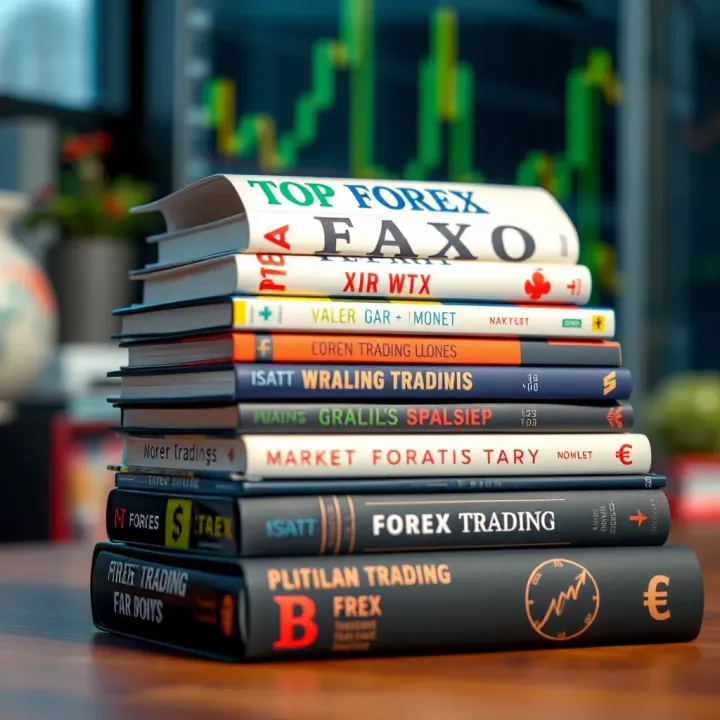
📚 Dive into the best forex trading books tailored for Nigerian traders. Explore strategies, market basics, and top picks for every skill level. 💹

📚 Discover top books on forex trading—from beginner guides to advanced strategies—that help Nigerian traders boost skills and master the market effectively!

📚 Find the best forex trading books for traders in Nigeria! Learn strategies, risk tips & market analysis to trade smart and boost your confidence. 💹
Based on 13 reviews