
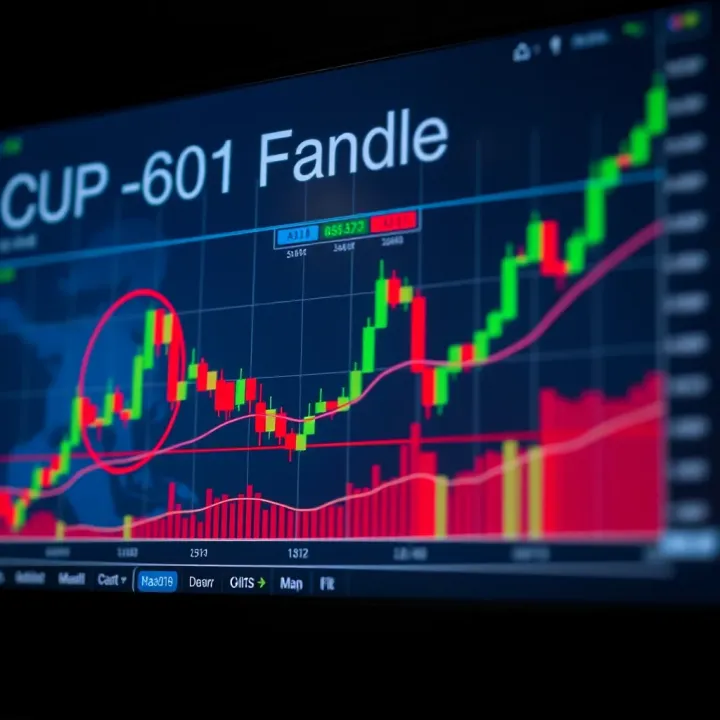
Seven Key Chart Patterns Every Trader Should Know
📈 Learn seven key chart patterns traders use to spot market moves. Understand structure, tips for reading charts, and where to find handy PDFs for quick study.
Edited By
Emily Saunders
Price action chart patterns provide traders a straightforward way to read market movements without depending on complex indicators. Instead of relying on lagging signals, these patterns reflect actual buyer and seller behaviour within the market. Nigerian traders, from those watching the NGX Exchange to forex enthusiasts, can benefit by recognising these shapes and understanding what they signal for future price action.
Fundamentally, price action analysis involves watching how price behaves over time. Instead of guessing where the market might go next, traders focus on real-time price changes visualised through candlesticks or bar charts. For example, a familiar pattern like the "double top" signals a potential reversal from an uptrend to a downtrend, suggesting that selling pressure is rising.

Here are key points that explain why mastering these patterns matters:
They allow reaction to market moves faster and with more confidence.
Traders avoid overcomplication from multiple indicators that sometimes give conflicting signals.
Patterns like flags, triangles, head and shoulders, and pin bars help identify entries and exits with clearer risk management.
A trader who masters price action can cut through market noise and see the market’s true intentions, a valuable skill especially in volatile markets like Nigerian equities or forex pairs involving naira.
Practically, learning price action means spotting each pattern on price charts, noting the volume and timing, then acting accordingly. For instance, a rising wedge on a forex chart could warn of weakening upward momentum, which might prompt traders to tighten stop-loss orders or prepare to short sell.
This article will guide you through the common price action patterns, their meaning, and share downloadable PDFs that deepen your understanding. Use these resources to build a solid foundation and improve your trading strategy on the NGX, MT4, or any charting platform.
Remember, effective price action trading requires discipline, constant practice, and keen observation. Starting with simple patterns and gradually increasing complexity will help you grasp market psychology and improve your chances of consistent profits.
Price action chart patterns are visual formations on price charts that traders use to predict future market moves. They rely solely on raw price data rather than technical indicators or complex algorithms. This makes them especially useful for traders who prefer a straightforward approach to reading the market without much noise. For example, spotting a 'double top' pattern early might signal an upcoming drop in price, allowing traders to adjust their positions accordingly.
Understanding these patterns helps traders interpret market sentiment and anticipate shifts before they become obvious. In Nigeria’s markets, where volatility and economic events may cause sharp price swings, price action patterns offer clarity amid uncertainty. Instead of relying on lagging indicators, traders can read the market’s story as it unfolds by watching how price moves and which patterns form.
Price action in trading refers to analysing the actual movement of a security's price over time. It excludes external factors like news or fundamental analysis and focuses strictly on the ups and downs charted on a price graph. Traders look at candlesticks, bars, or line charts to see how prices react to supply and demand.
For instance, if the price consistently creates higher highs and higher lows, the price action suggests an uptrend. Conversely, lower highs and lower lows indicate a downtrend. A hammer-shaped candlestick after a downtrend could signal a potential reversal, giving a clear, immediate read on trader behaviour without relying on indicators.
Chart patterns embody the psychology of market participants—buyers and sellers pushing prices up or down. For example, the 'head and shoulders' pattern often implies a shift from bullishness to bearishness, reflecting how enthusiasm runs out and sellers gain control.
These patterns arise because traders collectively react to price levels, support, and resistance points, causing prices to bounce, break, or consolidate. A triangle pattern, for example, shows a market indecision phase where buyers and sellers reach a standoff, often followed by a breakout that confirms direction.
By recognising these behavioural footprints on charts, traders can better time their entries and exits. They see beyond the numbers to understand the tug of war between demand and supply, which is valuable for making smarter trades, especially in fast-moving and sometimes unpredictable markets like those in Nigeria.
Price action chart patterns provide a window into market psychology, helping traders spot potential reversals or continuations early enough to make confident decisions.
In short, mastering price action patterns equips you with a practical, no-nonsense tool to navigate markets — removing guesswork and giving a clearer edge in trading.
Grasping key price action chart patterns is essential for any trader eager to read market moves without relying on fancy indicators. These patterns signal shifts or continuations in trader behaviour, helping you make informed decisions in real-time. Whether you're tracking the NGX or investing in forex, recognising these formations sharply improves your timing and risk management.

Reversal patterns spotlight moments when a prevailing trend likely shifts direction. The Head and Shoulders pattern, for example, indicates a change from bullish to bearish. Picture an uptrend where price forms three peaks—the middle (head) is the highest, flanked by two lower peaks (shoulders). Once price breaks below the neckline connecting the shoulders, many traders expect a downtrend to start. On the flip side, an Inverse Head and Shoulders suggests a bearish-to-bullish change.
Double Tops and Bottoms perform similarly but with two distinct peaks or troughs instead of three. A Double Top forms when price reaches a level twice but fails to break higher, signalling possible selling pressure. Conversely, a Double Bottom signals buying support after two dips around the same price level. In Nigeria’s active currency markets, spotting these patterns can prevent untimely entries, especially amid naira volatility.
Continuation patterns suggest the current trend will likely resume after a brief pause. Flags and Pennants look like small consolidations following a sharp price movement, often resembling a narrow rectangle or tiny triangle on the chart. These patterns generally form after a strong run. For instance, after a spike in a stock like Dangote Cement, a flag may appear before price continues its trend.
Triangles—ascending, descending, or symmetrical—indicate tightening price ranges as buyers and sellers deliberate. Breakouts from these can lead to solid moves either up or down. Nigerian traders monitoring equities or commodities like crude oil benefit from understanding these signs to avoid whipsaws and jump in early during breakouts.
Pin Bars are candlesticks with small bodies and long tails or wicks signalling rejection of certain price levels. They’re highly practical for spotting sudden shifts in trader sentiment. For example, if a pin bar forms at a strong support level on a forex pair like USD/NGN, it may hint at a bounce back.
Inside Bars occur when one candle's range is completely inside the previous candle’s range, signalling indecision but also potential for breakout. Nigerian traders often use inside bars to pinpoint consolidated ranges before major central bank announcements or economic data releases, helping manage their entry timing.
Recognising these price action patterns sharpens your ability to predict market turns and continuations without cluttering your charts with indicators.
By mastering reversal, continuation, and other useful patterns like pin bars and inside bars, you’re better placed to make disciplined trades in Nigeria’s unpredictable markets. Keep practising pattern identification alongside volume and support/resistance levels for greater accuracy and confidence.
Price action charting provides a straightforward way to read market movements without relying heavily on indicators. In Nigeria’s financial landscape, this method proves particularly useful because it helps traders navigate the often volatile naira and unpredictable market behaviours. Using price action charts effectively here means understanding local market dynamics and tailoring your analysis to fit these conditions.
The Nigerian market is distinct due to the frequent sharp fluctuations in the naira’s value against foreign currencies. For example, sudden policy announcements by the Central Bank of Nigeria (CBN) often cause rapid price swings in equities and forex pairs. Traders who depend solely on generic patterns without considering this volatility risk misreading the chart signals.
To adapt, focus on price patterns in relation to key support and resistance levels shaped by naira fluctuations. For instance, if the naira drops significantly, price action might show exaggerated bearish patterns in stocks sensitive to import costs, such as consumer goods companies. Recognising these quirks helps prevent false breakouts or whipsaws that are common when naira volatility influences the market.
It’s also worth noting that Nigerian markets are affected by factors like inflation rates and fuel prices; these create nonlinear price movements. Thus, relying on clean chart patterns alone won’t suffice — combining them with an understanding of these variables sharpens your market timing.
Local economic events heavily impact trading patterns in Nigeria. For example, election periods often bring volatility spikes, as political uncertainty affects investor confidence. Price action patterns during these times may appear erratic but can actually signal upcoming trend shifts.
Similarly, major announcements such as CBN’s monetary policy meetings, NNPC dealings on fuel subsidies, or policy changes on import regulations can trigger significant price moves. Watching how price action forms around these dates provides clues about market sentiment.
Try to mark these economic events on your trading calendar. When a head-and-shoulders pattern forms right before an election or a naira devaluation announcement, it might signal a genuine market reversal or continuation. Paying attention to both price action and the context behind the moves gives you an edge over traders working with technicals in isolation.
Combining price action charting with local market insights and economic news gives Nigerian traders a clearer picture of true market direction.
In practice, Nigerian traders who understand the interplay between the naira’s behaviour, economic events, and price action patterns often save themselves from costly mistakes and spot profitable opportunities faster. This approach also helps in managing risk better, especially in markets where external shocks are frequent.
By adjusting your reading of price action charts to suit Nigeria’s unique market environment, you can improve your trading results and better anticipate the market’s next move.
Price action trading demands a good understanding of patterns and their meaning. PDFs focused on price action chart patterns provide a portable, easy-to-review resource that allows traders to deepen their knowledge on their own time. These documents often contain detailed charts, step-by-step explanations, and practical tips that can be harder to grasp from video or forum discussions alone. For Nigerian traders, having solid PDF guides is an effective way to study, especially when internet connectivity or data costs limit streaming.
Not all PDFs on price action trading are equally useful. Free PDFs from well-known trading educators or respected platforms like BabyPips often offer high-quality content that covers fundamentals and basic patterns clearly. Meanwhile, paid PDFs from seasoned traders or trading institutions may go further, including advanced setups, risk management techniques, and live examples.
Examples include guides offered by professional traders on platforms like Investopedia or Trader's Army. Nigerian traders can also find relevant materials from local trading education hubs or fintech companies such as Kuda and Bamboo, which sometimes provide free resources tailored to local market nuances. Always verify the author's credibility, the publication date, and user reviews before trusting a guide. An outdated PDF might omit important insights on current market behaviour.
To make PDFs work well for your learning, treat them like workbooks rather than just reading material. Print key pages for quick revision or highlight critical points using digital annotation tools. Relate pattern examples in the PDFs to live charts of the Nigerian Stock Exchange (NGX) or currency trading platforms. This exercise helps link theory with real market behaviour.
Create a summary file of the patterns you find most recurring or profitable. For instance, if you trade forex pairs involving the naira, note which price action setups align with typical Naira volatility spikes during fuel subsidy updates or economic announcements.
Besides, don't rush through PDFs. Reading severally will reinforce understanding and reveal subtle details missed before. Combine reading with backtesting on historical data where possible. This hands-on approach cements knowledge and guards against over-reliance on theory alone.
Having a reliable collection of PDF guides on price action chart patterns not only boosts confidence but also sharpens decision-making by providing structured, repeatable learning suited for Nigerian market realities.
By choosing well-vetted PDFs and interacting actively with their content, you equip yourself with a practical edge essential for successful trading.
Trading price action patterns demands more than just spotting shapes on charts. Many traders, especially those new to the craft, fall into common traps that cost them money and confidence. Understanding these pitfalls helps you avoid costly errors and improves your trading results.
A frequent mistake is treating price action chart patterns as foolproof signals by themselves. Patterns like head and shoulders or double tops are useful, but they must be read within the broader market context. For example, spotting a bullish flag during a strong downtrend isn’t a green light to buy — it may just be a temporary pause before prices fall further.
Ignoring factors like overall market trend, volume, and recent news leads to false signals. Nigerian markets, with their unique volatility driven by naira fluctuations and economic data releases, demand extra caution. Suppose you trade on a bullish pennant formation, but a sudden announcement about fuel subsidy removal hits the news; the pattern’s validity can evaporate instantly.
Beyond the pattern itself, look at support and resistance zones, recent highs or lows, and how volumes behave. That layered analysis makes a big difference.
Price action trading isn't about guessing right but managing right. Some traders jump in whenever a pattern appears, ignoring how much they can lose if the trade turns against them. Skipping stop-loss orders or setting them too wide can wipe out gains quickly.
In Nigerian markets, where power supply inconsistency can affect market hours and order executions, sticking firmly to risk management rules is crucial. For example, if you risk 2% of your trading capital per trade, even a few losses won’t devastate your portfolio.
Market conditions must also guide trading decisions. For instance, during the ember months, volatility often spikes due to festive activities and end-of-year budget considerations. Trading the same pattern aggressively during this time without adjusting for unstable market moves leads to unnecessary losses.
Remember: Successful price action trading balances pattern recognition with risk control and understanding of the broader economic backdrop.
Combine patterns with market trend and volume: Confirm signals with other price action clues.
Incorporate local economic events: Follow CBN policies, fuel price changes, and political announcements closely.
Always set stop-loss orders: Protect your capital from unexpected market reversals.
Adjust your strategy for market phases: Be cautious in high volatility periods like ember months.
Avoiding these mistakes takes discipline but pays off in more consistent and profitable trading outcomes.
📈 Learn seven key chart patterns traders use to spot market moves. Understand structure, tips for reading charts, and where to find handy PDFs for quick study.
Learn how binary number subtraction works in computing 🖥️: from basic operations and borrow handling to solving common challenges with clear examples.

🔢 Master the essentials of binary multiplication with clear steps, key rules, and practical uses to boost your computing skills effectively! 💻⚙️

💻 Understand how binary code powers computers and digital tech. Learn the basics and why it's essential for storing and processing data in simple terms.
Based on 12 reviews