

Effective Forex Trading Tips for Nigerian Traders
📈 Explore practical forex strategies tailored for Nigerian traders. Master market analysis, manage risks, and boost trading success with proven tips!
Edited By
Isabella Hughes
In forex trading, a pip is the smallest price movement you’ll see between two currencies. It’s the basic unit that lets traders measure profits, losses, and market changes with precision. For Nigerian traders dealing on platforms like MT4 or MT5, understanding pips is not just useful—it’s necessary for making better trading decisions.
At its core, a pip traditionally stands for the "percentage in point" or "price interest point." It usually represents the fourth decimal place in most currency pairs. For example, if the USD/NGN rate moves from 460.1200 to 460.1300, that’s a change of one pip. However, there are exceptions. Some pairs involving the Japanese yen, for instance, count a pip as the second decimal place due to the yen’s lower value range.
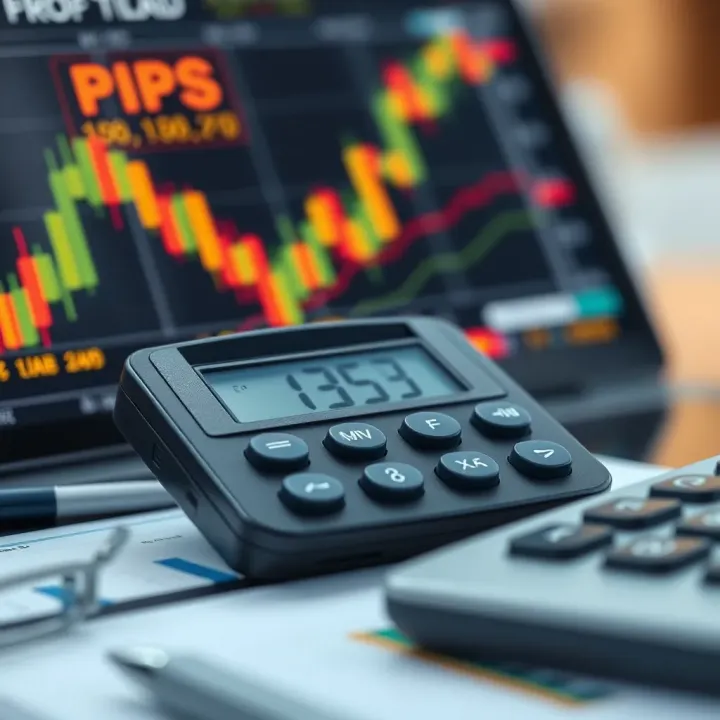
For Nigerian traders, knowing how to calculate and interpret pips can help quantify gains or losses accurately and manage risk effectively.
Why does this matter? Knowing pip value influences your position sizing—how much money you stake per trade—and helps plan your exit points. Since forex trading involves high leverage, missing the significance of pip movements could easily wipe out your trading account.
Here’s a quick breakdown of pip calculation and importance:
Basic pip value: In currency pairs quoted to four decimals, one pip equals 0.0001. For USD/NGN, this means a tiny movement like from 460.1200 to 460.1300 equals one pip.
Profit and loss: If you open a trade with a 1 lot size (typically 100,000 units) and the price moves 10 pips in your favour, your profit depends on the pip value for that pair.
Leverage impact: High leverage offered by many brokers means that small pip moves can result in large profit or loss, so understanding pips is vital for sound money management.
By grasping this simple but crucial concept, Nigerian forex traders can sharpen their strategies and avoid costly mistakes, especially in the dynamic and sometimes volatile local forex market.
Next, we will look at practical methods to calculate pip values for trades based on your account currency and trade size.
Understanding what a pip represents is fundamental for anyone trading forex, especially Nigerian traders looking to navigate the complexities of currency markets effectively. A pip measures the smallest price change between two currencies and acts as the baseline unit for gauging profit or loss in a trade. Without grasping this concept, it becomes difficult to manage risks or set realistic targets in forex.
A pip, short for "percentage in point," is usually the smallest standard measure of movement in the price of a currency pair on the forex market. It often corresponds to the fourth decimal place in most currency pairs, meaning if EUR/USD moves from 1.1050 to 1.1051, that's a one pip movement. For traders, understanding that this tiny increment can have significant impacts on profit and loss is essential, especially when dealing with large volumes.
There are also standard, mini, and micro pips which relate to the scale of lot sizes traders use. A standard lot size usually represents 100,000 units of currency, where one pip might be worth about $10. Mini lots are 10,000 units, with their pip worth roughly $1, and micro lots are 1,000 units, with pip values around 10 cents. These options allow Nigerian traders of all account sizes to get involved, whether they are starting small or trading big.
Forex prices are quoted with a specific number of decimal places which affects how pips are measured. Most pairs have four decimal places, but some pairs, especially those involving the Japanese yen, use two decimal places due to the yen's low value per unit. Nigerian traders dealing with currency pairs such as USD/NGN observe these decimal differences closely to calculate exact pip changes accurately.
For example, the USD/NGN pair might be quoted as 460.15. Here, the pip is measured at the second decimal place, so a move from 460.15 to 460.16 means one pip change. This differs from the EUR/USD pair, where the pip is the fourth decimal place. Knowing where the pip sits for each pair helps traders set stop losses, take profits, and calculate risk in Nigerian naira terms reliably.
To put it simply, recognising the pip size and its location in currency quotes equips Nigerian traders to measure and manage their trades confidently, adapting strategies suitable for local naira market conditions and global forex shifts.
Understanding these basics lays the groundwork for more advanced pip calculations and strategies, critical for making sound trading decisions in Nigeria's forex scene.
Calculating pips and understanding their monetary value is a key skill for any forex trader. Without knowing how to measure pip differences accurately, you cannot gauge your profit or loss effectively. For Nigerian traders, especially when dealing with volatile pairs like USD/NGN, this calculation informs smarter decisions and risk management.
Using price points difference involves subtracting the entry price from the exit price to find the pip movement. For example, if you buy USD/NGN at 460.50 and sell at 461.00, the difference is 0.50, which corresponds to 50 pips if one pip equals 0.01 for this pair. This simple arithmetic lets you see exactly how much the price has moved in your favour or against you, making it easy to monitor trade outcomes. It’s particularly useful when manually checking trades without an automated system.
Tools and platforms that automate pip calculation make life easier, especially for active traders. Platforms like MetaTrader 4 or 5 show pip differences and calculate profit/loss in real-time, removing human error. Nigerian brokers often provide web and mobile apps with built-in calculators, which instantly translate price moves into pips. This allows traders to focus on strategy rather than the maths, which can be a lifesaver during fast market changes.
Role of lot sizes in pip value is crucial. A standard lot is 100,000 units of the base currency, a mini lot is 10,000, and a micro lot is 1,000 units. The larger the lot size, the bigger the monetary value for each pip. For example, in USD/NGN, one pip in a standard lot could represent ₦1,000, but in a micro lot, it’s just ₦10. Knowing your lot size helps you control your exposure and potential gains or losses, making it easier to match trades with your risk appetite.
How exchange rates affect pip value in ₦ is often overlooked by new traders. Since many currency pairs involve the US dollar as a base, the pip value changes with the naira exchange rate. If the naira weakens against the dollar, each pip movement could translate to a higher naira value. This dynamic means that even small pip gains can become significant in naira terms during periods of high volatility.
Practical example using common trading pairs: Let's say you trade the USD/NGN pair at a lot size of 10,000 units (mini lot). If the price moves from 460.00 to 460.20, that’s 20 pips. Each pip for this mini lot might be worth ₦100, so your gain is ₦2,000. However, if the naira suddenly weakens, the pip value could increase to ₦120 per pip, pushing your gain higher to ₦2,400 for the same move. This example highlights why traders must stay aware of current exchange rates and lot sizes to estimate real profit or loss accurately.
Understanding how to calculate pips and their monetary value empowers Nigerian traders to manage trades confidently, control risk, and make better decisions in a fluctuating market.
By mastering these calculations, you ensure precise tracking of your trades and avoid surprises from naira volatility or misjudged lot sizes.
Grasping pips is essential because they quantify price changes in the forex market, allowing traders to track profits and losses precisely. Without a clear understanding of pips, it becomes difficult to measure a trade's success or failure accurately. For Nigerian traders dealing with volatile pairs like USD/NGN, this precision is even more critical as fluctuations can be sharp and sudden.
Using pips to track performance means you can pin down exactly how much your trade gains or loses, regardless of the currency pair. For instance, if you buy USD/NGN at 460.50 and it rises to 461.10, that 60-pip move represents your profit margin. Knowing the pip movement helps you gauge the effectiveness of your strategy and decide when to enter or exit trades.
Risk management likewise depends heavily on pips. Calculating how many pips you risk per trade enables you to limit potential losses. Suppose you decide to risk 50 pips on a trade; you can set your stop loss accordingly to prevent bigger losses. This discipline ensures you don’t wipe out your capital while navigating Nigeria’s unpredictable economic environment.
Determining stop loss based on pip values helps protect your investment. For example, if the average daily movement of a currency pair is 100 pips, placing a stop loss too close, like 10 pips, risks premature exit due to normal market noise. A well-calculated stop loss could be 30 to 50 pips away, balancing risk and market volatility.
The size of pips also impacts how you plan your exit strategies. Larger pip sizes require wider stops and take profit levels, while smaller pip values allow tighter controls. This flexibility lets you design strategies suited to your trading style and the behaviour of specific pairs. For Nigerian traders, this is vital when trading pairs like USD/NGN or EUR/USD, where volatility and spread can vary widely.
Knowing pip movements is not just about numbers; it empowers you to manage your trades with greater confidence and protect your capital amidst market uncertainties.
By mastering pip relevance, Nigerian forex traders can sharpen their decision-making, effectively balance risks, and improve overall trading outcomes in local and global markets.
Understanding and applying pip knowledge within Nigeria's forex environment gives traders an edge against the market's unique challenges. Unlike more stable currencies, the Nigerian naira (₦) undergoes frequent swings due to factors such as monetary policy changes by the Central Bank of Nigeria (CBN), oil price fluctuations, and parallel market dynamics. Pips, the smallest unit of price movement, become vital measuring tools for navigating these shifts efficiently.
Naira volatility directly affects pip calculations because the value of each pip, when converted to naira, can vary significantly within short time frames. For example, a pip gain on the USD/NGN pair today might be worth ₦50, but after a sudden policy tweak or forex market intervention, that value can shift drastically. Traders must factor this variability when sizing positions and setting take profits or stop losses to avoid surprises in potential gains or losses.
Since the naira’s value is less stable compared to major currencies like the US dollar or euro, precise pip tracking enables traders to react quickly to market moves. Adequate understanding of pip values in relation to naira fluctuations helps to adjust trading strategies in real time, especially in times of economic announcements or macro events impacting the Nigerian economy.
When trading pairs like USD/NGN or EUR/NGN, strategies should be adapted to accommodate wider spreads and sudden price jumps that reflect local factors. Traders often monitor the parallel market rate alongside official FX rates to gauge possible pip movement ranges. Combining pip-based technical analysis with situational awareness of Nigeria’s forex restrictions improves decision-making, particularly when scalping or day trading.
Accurate pip calculations rely heavily on the trading platform’s reliability and precision. Nigerian traders should look for platforms offering real-time price feeds with low latency and transparent spread displays. Features such as customisable charting tools and pip calculators save time and reduce errors, particularly when switching between pairs with different decimal places or fluctuating spreads.
Security and regulatory compliance also play into platform selection. Platforms regulated by bodies like the Securities and Exchange Commission (SEC Nigeria) provide added assurance against price manipulation. Since many Nigerian traders access forex markets via mobile devices, apps with stable performance under limited internet conditions are essential.
Popular platforms among Nigerian traders include MetaTrader 4 and 5, known for their robust analytical tools and wide broker support. Local fintech innovations such as Bamboo and Trove also offer forex capabilities, integrating pip tracking with broader investment portfolios. Choosing a platform that blends technical reliability with ease of use ensures traders can follow pip movements accurately, leading to better trade execution and risk management.
Correct pip measurement tailored to Nigeria's forex peculiarities can mean the difference between profit and loss in volatile conditions.
As you navigate forex trading, questions about pips often pop up, especially concerning their nuances and practical implications. Clearing these doubts sharpens your understanding and boosts your ability to make sound trading decisions. Let’s explore some common queries that Nigerian traders frequently encounter.
Pips represent the smallest price movement in a currency pair, but this definition varies slightly depending on the pair's decimal places. For most currency pairs like EUR/USD or GBP/USD, a pip equals 0.0001, which is the fourth decimal place. However, for pairs involving the Japanese yen (JPY), such as USD/JPY, a pip is 0.01, reflecting the second decimal place.
This difference matters when you trade pairs like USD/NGN (US Dollar/Nigerian Naira), which often feature more decimal places due to the naira’s lower value against the dollar. Trading platforms might quote USD/NGN to four or five decimals, so knowing exactly which decimal counts as a pip helps you calculate your gains or losses accurately. For example, a movement from 460.5000 to 460.6000 in USD/NGN is a 10-pip change.
Pips themselves do not predict market direction but provide a standard measure for price movement. Traders use pip changes to analyse volatility and price trends. For instance, sharp pip movements within a short period may signal increased market activity or unfolding news events affecting currency values.
In Nigeria, where economic indicators and political developments quickly impact the naira, watching pip fluctuations on USD/NGN can offer clues about market sentiment. Nevertheless, pip analysis works best when combined with other tools like technical indicators or fundamental news analysis to predict market moves more reliably.
Spreads and commissions directly affect your net pip gains or losses. The spread is the difference between the buying (ask) and selling (bid) price, often measured in pips. For example, if the spread on EUR/USD is 2 pips, you start your trade 2 pips in the red.
Some brokers charge additional commissions on trades, which further reduce your profits or increase losses when converted into pip costs. Nigerian traders should compare spreads and commission structures carefully, as higher costs mean you need greater pip movement in your favour before making profits.
To illustrate, if you enter a trade on USD/NGN with a 5-pip spread and a commission costing 3 pips equivalent, your break-even point shifts by 8 pips. This impact influences your stop loss and take profit settings, making precise pip calculations essential for managing your risk effectively.
Understanding these common questions about pips helps you trade smarter, especially in the Nigeria forex landscape where currency pairs can behave uniquely. Always factor in decimal differences, use pip changes as one of multiple market indicators, and account for spreads and commissions to ensure realistic profit expectations.
By mastering these elements, Nigerian traders can navigate the forex market more confidently and improve their chances of consistent success.
📈 Explore practical forex strategies tailored for Nigerian traders. Master market analysis, manage risks, and boost trading success with proven tips!
🇳🇬 Discover smart forex trading tips & strategies tailored for Nigerian traders! Learn to pick brokers, manage risks, and trade confidently with ease. 📈

Explore proven forex trading strategies for Nigerians 🇳🇬, covering technical skills, risk management, and market psychology to boost your success 📈💡
Looking for the best forex trading site in Nigeria? Discover how to pick secure platforms with low fees, great currency options, and reliable support 📈💰
Based on 10 reviews