
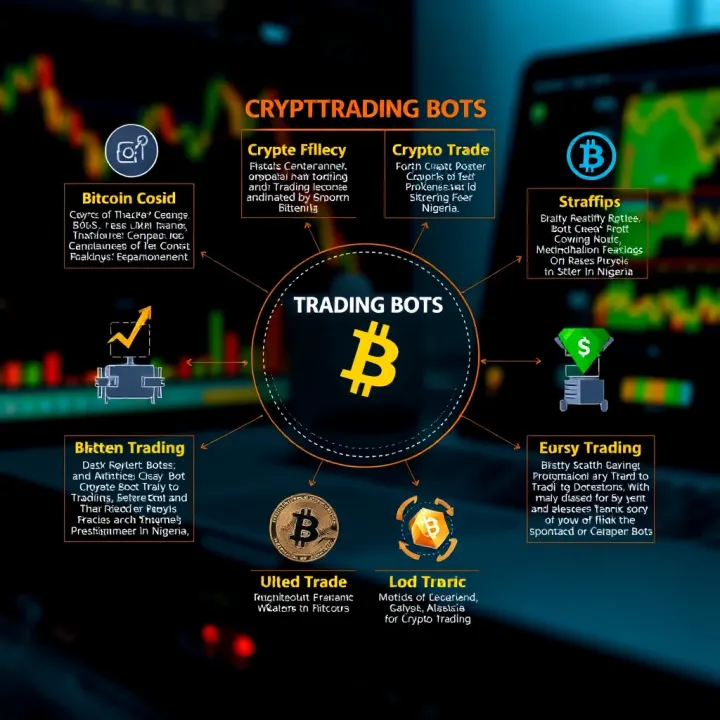
Top Crypto Trading Bots for Nigerians
🤖 Discover top crypto trading bots in Nigeria! Learn key features, benefits & tips for choosing safe, effective automation to boost your trading success.
Edited By
James Wentworth
Crypto trading bots have become a regular tool for traders looking to make smarter moves in Nigeria's growing crypto market. These automated programmes execute buy and sell orders using predefined rules, timing, and strategies. They work around the clock, scanning price movements on platforms like Binance, Luno, and Quidax, helping traders spot opportunities without needing constant attention.
Unlike manual trading, which demands patience and quick reactions, bots tackle trades swiftly and consistently—even in the middle of the night during heavy volatility. For Nigerian traders juggling daily commitments or wary of Lagos traffic's draining effects on time, bots bring clear advantages.
In practice, a bot might automatically buy Bitcoin when its price dips 3% within an hour, then sell once it gains 5%, repeating this cycle as programmed. Such patterned trades reduce emotional decision-making, a common pitfall that causes many traders to lose money.
Automated trading tools don’t guarantee profits but they cut down the stress and time spent watching charts.
Bots use strategies ranging from simple rules like moving averages crossover to more complex ones involving machine learning. Many Nigerian traders start with ready-made bots available on platforms like 3Commas or Cryptohopper, which offer easy interfaces and integration with popular exchanges.
Before adopting a bot, it’s essential to grasp how it operates and the risks involved. Poor configuration can wipe out your funds faster than manual trades. Also, bots rely heavily on internet stability and exchange API performance, which can sometimes be spotty in Nigeria. Therefore, testing bots with small amounts or in demo mode should precede full deployment.
In summary, crypto trading bots can be valuable assistants for Nigerian traders willing to learn their workings and manage their risks well. They bring efficiency and discipline to trading but require close attention to settings and market conditions to avoid losses.
Understanding how crypto trading bots operate is essential for anyone looking to engage with them effectively. These bots automate the trading process, applying set rules and strategies to buy or sell cryptocurrencies without the trader needing to constantly monitor the market. This makes them especially beneficial in a fast-moving market like crypto, where prices can change in seconds. Nigerian traders can leverage bots to capture opportunities anytime, even while asleep or busy with other activities.
Automated execution based on preset rules forms the backbone of every trading bot. Traders input specific conditions, such as buying Bitcoin when its price dips below a certain threshold or selling Ethereum if its moving average crosses a set level. Once these rules are programmed, the bot executes trades automatically without any manual intervention. This setup cuts down emotional decision-making, avoiding panic selling or impulsive buying, which traders often face.
Integration with cryptocurrency exchanges happens mainly through Application Programming Interfaces (APIs). These APIs allow the bot to connect securely with exchanges like Binance, Luno, or Quidax, enabling it to fetch market data and place trades directly. For instance, when a bot spots an arbitrage opportunity between Binance and Luno, it can execute trades on both platforms fast enough to profit before the price gap closes. Without this seamless API connection, bots wouldn’t be able to react quickly or effectively.
Technical indicators and algorithms drive decision-making inside trading bots. Common indicators include moving averages, Relative Strength Index (RSI), and Bollinger Bands. These tools help the bot analyse market trends and momentum, signalling when to enter or exit trades. For example, a bot might use RSI to detect if Bitcoin is overbought or oversold, triggering a sell or buy action respectively. Such algorithms allow bots to follow consistent strategies rather than rely on guesswork or gut feel.
Trend following and momentum trading involve bots buying assets that are gaining strength and selling those losing momentum. Say Bitcoin has maintained an upward trend for days; the bot would continue buying during that trend, hoping to ride the wave. Nigerian traders can benefit since the bot responds instantly to changing price patterns, which humans might miss if they aren’t glued to their screens.
Arbitrage bots focus on exploiting price differences between exchanges. Because crypto prices differ slightly from one platform to another due to liquidity or demand variations, bots buy the asset where it's cheaper and sell where it’s pricier. For example, if Ethereum costs ₦1,200,000 on Binance but ₦1,210,000 on Luno, the bot can capitalise on this gap before the prices equalise. This strategy requires speed and volume to be profitable, which manual trading can hardly achieve.
Market-making bots work by providing liquidity to the market. They place both buy and sell orders around the current price to earn from the spread — the difference between buying and selling prices. This approach not only helps traders earn small but consistent profits but also aids exchange platforms by making trading smoother and more liquid. Nigerian traders who want steady returns with less exposure to sharp market swings might find this strategy suitable.
Successful crypto trading bots rely on well-defined rules, fast data connections, and proven strategies. Knowing how these elements fit together gives Nigerian traders an edge when choosing or customizing a bot.
By grasping how crypto bots operate under these mechanisms and strategies, traders in Nigeria can better decide how to incorporate automation into their trading plans, balancing between opportunity and risk with a clearer sense of control.
Using crypto trading bots offers several clear benefits, particularly for Nigerian traders looking to make the most of fast-moving markets. These automated tools save time, improve trading speed and efficiency, and make trading accessible to both beginners and experts. Understanding these advantages helps traders decide whether such bots fit their strategies.
Crypto markets never sleep, running round the clock globally. A trading bot works continuously without breaks or tiredness, seizing opportunities anytime, whether it's the middle of the night or during busy daytime hours. This benefit is valuable for Nigerian traders juggling other commitments, as bots can monitor and execute trades 24/7, something difficult for humans to match.
Emotions often cloud judgment, causing traders to panic sell or hold onto losing positions too long. Bots follow strict programmed rules, ignoring fear or greed. They can execute trades based on data, not gut feeling. For example, when the naira weakens sharply against the dollar, a bot can quickly adjust positions without second-guessing, offering more rational trade execution.

Crypto prices can shift dramatically within seconds. Bots react instantly to market signals and conditions, placing or closing orders much faster than a human could. This speed advantage helps capture profits during brief price spikes or protect capital when prices plunge unexpectedly, especially relevant in volatile Nigerian trading environments.
Unlike a single trader, bots can handle numerous trades across different cryptocurrencies and exchanges simultaneously. This means they can exploit multiple price differences or trends at the same time—something very hard for manual traders. For instance, a bot might scalp small profits on Bitcoin at Binance while managing Ethereum trades on Luno, improving overall efficiency.
Many bots come with ready-made trading strategies that beginners can easily deploy. These templates require minimal setup, helping new traders get started without deep technical expertise. Nigerian traders can pick from popular strategies like trend following or arbitrage and adjust basic parameters through clear interfaces.
Experienced traders benefit from bots that allow fine-tuning or complete customisation. They can program unique algorithms or adjust parameters like stop-loss levels and indicators to suit complex strategies. This flexibility supports diverse trading styles, from conservative holding to aggressive short-term trading, aligning with individual risk appetite.
In sum, crypto trading bots bring time-saving automation, emotion-free execution, fast market response, and broad accessibility. Yet, Nigerian traders should still stay informed and cautious to maximise benefits.
Crypto trading bots have reshaped how traders engage with the volatile cryptocurrency markets. Yet, alongside their popularity come important risks and limitations that Nigerian traders must grasp. Understanding these pitfalls helps avoid costly mistakes and better manage expectations.
Sudden price swings beyond bot parameters present a serious challenge. Bots rely on preset rules and thresholds — for instance, to buy when an asset hits a certain support level or sell after a target profit. But crypto markets are notorious for surprise shocks, such as regulatory announcements or whale movements, which may cause rapid price swings beyond what the bot can handle. When this happens, bots can either freeze, make unfavourable trades, or miss critical exit points, leading to unexpected losses.
Exchange outages and system failures add another layer of risk. Given the high dependency on crypto exchanges, any downtime or technical glitch can stop bots from executing trades or retrieving market data. For example, during periods of heavy market stress, Nigerian traders may find their bots disconnected or delayed due to exchange throttling or outages, missing valuable opportunities or failing to cut losses in time.
Vulnerabilities in API key management pose a significant threat. Bots operate through API keys granted by exchanges, which give them permission to trade on behalf of the user. If these keys are not securely stored or are shared with unreliable providers, hackers could gain access to accounts, draining funds quietly. Nigerian traders should treat API keys like passwords — never share them recklessly, and use features like withdrawal whitelist where possible.
Scams and unreliable bot providers remain common issues in Nigeria's growing crypto scene. Some bot services lure users with promises of guaranteed profits but deliver no workable software or sideline user funds. Others employ dubious tactics, such as hidden fees or backdoors for stealing assets. Before trusting any bot platform, Nigerian traders should scrutinise user reviews, seek recommendations from local crypto communities, and verify credentials.
Need for constant monitoring and updates is often underestimated. Crypto markets evolve fast, so strategies must adapt to new patterns and exchange rule changes. Bots require regular software updates and parameter tuning; otherwise, their effectiveness fades. Nigerian traders may find that without ongoing attention, bots operate on outdated logic, increasing risks of underperformance.
Complex setup for some users can discourage beginners. Configuring bots involves linking exchange APIs, choosing trading strategies, setting stop-loss orders, and understanding technical indicators. Without basic technical knowledge, these steps can feel overwhelming. Hence, Nigerian traders should start with user-friendly platforms offering presets or seek expert advice before committing significant funds to complex bots.
The convenience of crypto trading bots comes with clear risks. Nigerian traders must carefully weigh these to protect capital and make informed choices.
Always test bots with small amounts first.
Use trusted exchanges with strong security records.
Stay updated on regulatory changes within Nigeria.
Combine automated trading with manual oversight.
Such disciplined practices help balance the power of bots with the realities of the crypto environment.
Understanding the types of crypto trading bots is vital for Nigerian traders aiming to maximise their strategies in this fast-moving market. Each bot type operates differently and suits various trading approaches, which can affect your potential profits and risks. Knowing their practical uses helps you select the bot that fits your trading goals and resources.
Arbitrage bots take advantage of price differences for the same cryptocurrency on multiple exchanges. For example, a bot may buy Bitcoin cheaply on one platform where demand is low and simultaneously sell it on another where prices are higher. This syncing of trades exploits market inefficiencies, allowing traders to earn profits without relying on price trends.
This strategy is especially relevant in Nigeria, where exchange rates and liquidity can vary between local and international platforms. However, success depends heavily on execution speed and trading volume. Arbitrage opportunities often last only a few seconds, so bots must act swiftly.
Speed is crucial for arbitrage bots because even a slight delay can cause missed opportunities or losses. High-frequency trading demands well-optimised software and stable internet connections. Nigerian traders should consider data costs and network reliability, as any lag reduces effectiveness.
Additionally, volume matters since small arbitrage gains require larger trade sizes to be worthwhile after fees. Some exchanges impose limits on order sizes, so bots must calculate optimal trade volumes. Understanding these factors helps traders manage capital efficiently and avoid overexposure.
Market-making bots increase liquidity by placing both buy and sell orders around the current market price. They aim to profit from the spread—the difference between the highest buying price and the lowest selling price. This approach supports smoother trading by offering continuous orders.
In practice, these bots help Nigerian traders earn steady returns in less volatile markets or during lull periods. By constantly supplying bids and asks, market-making bots can capture small price changes repeatedly, making consistent profits possible.
Profits come from the spread difference. For instance, if a bot buys Bitcoin at ₦20,000,000 and sells at ₦20,005,000, the ₦5,000 difference accumulates over many trades. Although individual gains are small, frequent transactions can add up, especially with lower trading fees.
Traders should be mindful of market conditions. Sharp price swings may expose market-making bots to losses if the spread widens unexpectedly. Proper parameter settings and ongoing monitoring are necessary to prevent unwanted exposure.
Technical indicator bots use tools like moving averages and the Relative Strength Index (RSI) to decide when to enter or exit trades. Moving averages smooth out price data to identify trends, while RSI signals overbought or oversold conditions.
These bots react to chart patterns much like a technical analyst would, automating decisions based on predefined indicator thresholds. For example, a bot might buy Bitcoin when the 50-day moving average crosses above the 200-day moving average—a popular trend signal.
The benefit for Nigerian traders is the customisation available. Bots can be tailored to fit unique trading styles or market conditions. You can adjust indicator periods, combine multiple signals, and experiment with timing.
Customisable strategies mean traders can refine their bots according to personal risk appetite or specific currencies. This flexibility supports diverse market activities, from short-term scalping to longer swing trades, aligning well with varying capital sizes and market access.
Selecting the right type of trading bot hinges on understanding how each functions and aligns with your trading objectives in Nigeria’s evolving crypto landscape.
By appreciating these core bot categories—arbitrage, market-making, and technical indicator bots—Nigerian crypto traders can better decide which approach matches their skills, resources, and market outlook. Careful choice and ongoing strategy adjustments remain essential to navigating this complex environment successfully.
Crypto trading bots can offer exciting opportunities for Nigerian traders, but knowing how to use them wisely is key. These automated tools depend on their providers’ reliability, adhere to local regulations, and require disciplined risk management. Let’s break down what you should keep in mind.
Before trusting any bot with your money, you need to check user reviews and community feedback thoroughly. Plenty of online forums and social media groups have traders sharing their experiences with various bot platforms. For example, if a bot provider has many complaints about withdrawal delays or hidden fees, steer clear. On the other hand, positive, consistent feedback from active users can indicate a trustworthy service.
Alongside reviews, verifying security features matters a lot. Reliable bots should offer strong API key management with options like withdrawal restrictions and two-factor authentication. Imagine leaving your account wide open: anyone with your API key could drain your funds. Also, always confirm if the provider keeps your data safely and whether they have a clear privacy policy. Nigerian traders, especially, should be cautious of providers promising unrealistic returns—that’s a common red flag.
Nigerian law doesn’t explicitly ban cryptocurrency trading, but staying compliant is crucial. The Central Bank of Nigeria (CBN) has issued directives discouraging banks from facilitating crypto deals, yet peer-to-peer trading persists actively. You should keep accurate records of your transactions and understand that the regulatory environment might change.
When it comes to taxes, reporting your crypto gains to the Federal Inland Revenue Service (FIRS) is necessary. Even though enforcement is still emerging, if your profits grow to significant amounts, FIRS expects you to declare and pay the appropriate taxes, such as capital gains tax or income tax. Keeping your transactions transparent prevents future legal headaches and aligns with growing Nigerian initiatives to formalise the crypto market.
Diversify your trading strategies rather than relying on a single bot or tactic. Markets can shift quickly, and a bot optimised for trending Bitcoin might perform poorly during sideways or volatile periods. Many Nigerian traders spread their capital across different bots or mix manual trading with automated strategies to balance their risks.
It’s wise to start using bots with a small portion of your investment capital. Even the best bots can make losses due to sudden market swings or technical issues. For instance, beginning with ₦50,000 or ₦100,000 allows you to test performance without risking your entire savings. As your confidence and knowledge improve, you can gradually scale up your allocations.
Trustworthy bots combined with good risk management and staying legal will enhance your chances of success in Nigerian crypto trading, but never expect a magic solution.
By following these practical tips, you’ll be better positioned to tap into the benefits of crypto trading bots while avoiding avoidable pitfalls in the Nigerian market.
🤖 Discover top crypto trading bots in Nigeria! Learn key features, benefits & tips for choosing safe, effective automation to boost your trading success.
Explore how binary bots automate trading in Nigeria 🇳🇬. Learn their types, benefits, risks, programming basics, and tips for safe use. Trade smarter today! 🤖

Explore top crypto trading platforms for Nigerian investors 🇳🇬 Compare fees, security, local currency support & get tips for safe, easy trading today! 💹
Find the best crypto trading platform in Nigeria 🇳🇬 with our guide on security, fees, coins, payment methods, and safe local trading tips 💰🔒
Based on 5 reviews