
Best Forex Trading Platforms for Beginners in Nigeria
Learn how to pick the right forex trading platform in Nigeria. Discover key features, popular picks 🏦, and practical tips for beginner traders to trade safely and smart.
Edited By
Henry Cooper
Forex trading offers a practical way for Nigerians to grow their investment by exchanging currencies. Unlike traditional stock trading, the forex market operates 24 hours, five days a week, giving traders flexibility to engage at their convenience. However, making money in forex takes more than luck; it requires understanding how the market works, picking the right tools, and managing your risks carefully.
Many beginners jump in hoping to get rich quickly, but forex trading demands a clear strategy and discipline. Starting with a solid grasp of basic concepts like currency pairs (for example, USD/NGN or EUR/USD), pips (the smallest price change a currency can make), and leverage is essential. Leverage lets you control larger funds with smaller capital, but it can magnify losses too, so caution is necessary.

Success in forex trading depends heavily on education, patience, and consistent practice rather than chasing fast profits.
Here’s a straightforward way to begin:
Choose a trustworthy broker: Look for brokers regulated by respected authorities and those who support Nigerian traders with Naira deposits and withdrawals. Examples include platforms like XM or HotForex.
Open a demo account: Practice trading without risking real money to understand how the platform and market trends work.
Develop a trading plan: Decide your risk tolerance, investment goals, and the time you can dedicate daily or weekly to trading.
Learn risk management: Use stop-loss orders to limit losses and never risk more than 1-2% of your capital on a single trade.
Getting started with realistic expectations helps avoid common pitfalls. Keep in mind, no strategy guarantees instant success. Over time, as you get better at reading charts and market signals, earning consistent profits becomes achievable.
Ultimately, forex trading in Nigeria is within reach for anyone willing to commit time to learn and adapt. With the right choices and discipline, your ₦investment can steadily grow rather than swing wildly like an okada driver on Lagos roads.
Understanding the basics of forex trading is essential before putting your money on the line. Without knowing what forex entails and how it operates, it's easy to lose track of your investment goals or fall prey to errors. This section clarifies the core principles to give you confidence and a solid foundation.
Forex trading, simply put, is the buying and selling of currencies. This market is where money from different countries exchanges hands, and prices change based on supply, demand, and various economic factors. Unlike stock markets that trade shares in companies, forex deals with pairs of currencies traded against each other.
Consider how you exchange your currency when travelling abroad. Forex trading is a continuous version of this, happening in electronic markets 24 hours a day. It offers an opportunity to profit from currency value changes, but needs to be handled with care and knowledge.
Currencies in forex always trade in pairs—for example, USD/NGN or EUR/USD. The first currency is called the base currency, and the second is the quote currency. If you buy a pair, you’re buying the first currency and selling the second. For instance, buying USD/NGN means buying dollars and selling naira.
Forex prices fluctuate constantly. Nigerian traders watch pairs like USD/NGN closely because local economic events and government policies affect the naira's value. Understanding how these pairs move helps you anticipate opportunities or risks.
For Nigerians, forex is not just a global market but one linked tightly to everyday life. Official exchange rates, remittances, import costs, and inflation all relate to currency movements. When the Central Bank of Nigeria (CBN) adjusts its policies or when petrol prices change, forex markets react quickly.
Engaging in forex trading can offer a way to benefit from these shifts, especially when the naira faces pressure. Also, with more Nigerians accessing online banking and fintech platforms, forex trading has become more accessible and relevant as a side income or investment avenue.
The basic idea in forex is to buy a currency when its price is low and sell when it becomes higher, earning the difference as profit. For example, if you buy USD/NGN at ₦415 and later sell at ₦420, you make a gain on every dollar traded.
This simple concept requires being able to predict market movements with some accuracy, which comes from experience, analysis, and understanding global trends.
Leverage allows you to control a larger amount of currency than your initial investment, meaning small price moves can lead to bigger profits. However, it also means losses can be magnified. Margin is the deposit required to open a leveraged position.
If you use 100:1 leverage, with ₦10,000 you control ₦1,000,000 worth of currency. While this sounds tempting, it carries high risk, especially if the market moves against you. Nigerian traders should begin cautiously and avoid over-leveraging.
Forex markets can be volatile; prices can swing widely due to news, economic reports, or political events. While volatility increases risk, it also creates chances to make profit if you act wisely.
For instance, during the last fuel subsidy removal, the naira’s value fluctuated sharply, giving traders who understood the situation opportunities to earn. Watching news and economic indicators, particularly those relevant to Nigeria, helps traders spot such moments.
Forex trading isn’t about luck but understanding how currencies behave, knowing which pairs to watch, and managing your trades carefully. Grasping these basics is the first step toward making informed decisions that can grow your naira investment securely.
Starting forex trading without a proper set-up is like trying to drive an okada in heavy Lagos traffic without a helmet—risky and unwise. Setting up correctly lays a solid foundation for your trading journey, helping you avoid common pitfalls and enhancing your chances of making consistent profit. In Nigeria, specific considerations like choosing a trusted broker and funding your account securely are critical due to the local market conditions.
When selecting a forex broker in Nigeria, focus on transparency, user support, and affordability. Nigerian traders often fall victim to brokers who operate without clear terms or hide fees, so check if the broker openly displays their spreads and commissions. The availability of customer service that understands local banking options and working hours also matters: a broker unreachable when naira deposits go missing is no help.
Regulation and licensing give you a level of safety against fraud. Look for brokers authorised by reputable bodies such as the Financial Conduct Authority (FCA), Cyprus Securities and Exchange Commission (CySEC), or those registered with the Nigerian Securities and Exchange Commission (SEC Nigeria). Such regulation means the broker adheres to minimum standards of client fund protection and fair trading. Brokers without credible licenses should be approached cautiously, especially given Nigeria’s growing forex market scams.
Popular brokers accessible to Nigerians include FXTM, HotForex, and Alpari International. These brokers offer straightforward account opening processes, accept naira deposits, and provide trading platforms like MetaTrader 4 or 5, which are familiar to most Nigerian traders. Before you choose, compare their fees, spreads, and the ease of withdrawing funds back to your Nigerian bank account.
To open a trading account, verification with both your National Identification Number (NIN) and Bank Verification Number (BVN) is typically required. These help brokers comply with Nigeria's Know Your Customer (KYC) guidelines, reducing identity theft and ensuring your account is secure. It also speeds up the withdrawal process since Nigerian banks verify your identity using BVN.
Funding your account should be as simple as buying a bundle at a mobile shop. Nigerian brokers and many international ones now accept transfers via local banks, USSD codes, and payment wallets like OPay or Flutterwave. This convenience allows you to start trading without unnecessary delays or expensive international wire transfers. Make sure your broker supports these payment methods before committing.
Most brokers offer various account types—standard, mini, or micro—designed to suit different budgets and experience levels. Beginners usually benefit from micro accounts with smaller minimum deposits and trade sizes, reducing risk exposure while building experience. Choosing the right account depends on your capital and risk tolerance, so pick one that fits your trading size comfortably without stretching your finances thin.
Starting forex trading properly, with the right broker and account set-up, gives you the confidence and tools needed to navigate Nigeria’s unique market challenges and maximise your earning potential safely.
Making profit in forex trading isn’t just about spotting opportunities; it’s also about applying strategies that protect your money. Many new traders rush in without a solid plan, often losing their investment before they understand the market. This section explains practical ways to trade smarter, not harder, focusing on simple but effective tactics.
Trend following and breakout tactics are some of the first strategies beginners can master. Trend following means identifying the direction of the market—whether prices are generally moving up or down—and trading in that direction. For example, if the USD/NGN pair is steadily rising due to economic reports favouring the dollar, you buy with the expectation that prices will keep climbing. Breakout trading looks for moments when currency prices break out of usual ranges or resistance points, signalling a new, stronger movement. This requires watching charts carefully for price patterns, but it can open doors for quick profits if timed right.
Using technical indicators simply means relying on a few key tools rather than overwhelming yourself with many unreadable signals. For instance, the Moving Average (MA) can help smooth out price data and highlight trends, while the Relative Strength Index (RSI) signals when a currency pair might be overbought or oversold. These tools offer practical insights on when to enter or exit trades. Instead of guessing, using these technical aids can increase your chance of trading correctly.
Demo trading before risking real money is a safe practice every beginner should adopt. Nigerian traders can use demo accounts provided by brokers like MT4 or MT5 platforms to simulate real market conditions without risking ₦. This builds confidence and allows you to test strategies, understand order types, and navigate the trading platform. Once you consistently achieve gains on demos, moving to live trading becomes less of a gamble.
Setting stop loss and take profit points directly guards your capital. Stop loss is an automatic exit that limits losses if the market moves against you, while take profit locks in gains once your target price is reached. For example, if you buy EUR/USD at 1.2000, setting a stop loss at 1.1950 limits your loss to 50 pips, and a take profit at 1.2100 locks in 100 pips of profit. This discipline prevents emotion-driven decisions and runaway losses.
Calculating appropriate trade sizes helps you avoid risking too much on a single trade. A common rule is risking only 1-2% of your total trading capital per trade. So, if you have ₦100,000, you shouldn't lose more than ₦1,000 to ₦2,000 on a single position. Using the right lot size based on your stop loss distance ensures you follow this guideline, preserving your funds for future trades.
Avoiding overleveraging is critical because high leverage can multiply losses just as easily as profits. Nigerian traders might see tempting leverage offers of up to 1:100 or even 1:500, but using such high leverage without control often leads to rapid account wipeouts. It's safer to start with low leverage, like 1:10 or 1:20, allowing more breathing room while you learn to read the market.
Mastering these practical strategies is key to turning forex trading from a risky activity into a sustainable income source. Always remember, protecting your capital keeps you in the game longer and makes profit-making more achievable.
By focusing on simple trading tactics, sensible risk management, and practice before real money, Nigerian forex traders can build solid foundations for success. Stick to these basics and steadily improve as you gain market experience.
Having the right tools and resources at your disposal can make a significant difference in forex trading success, especially for beginners navigating the Nigerian market. These resources not only simplify trading activities but also improve your decision-making and risk management. From reliable trading platforms to local fintech integrations and learning communities, leveraging these assets helps you trade more efficiently and safely.
MetaTrader 4 (MT4) and MetaTrader 5 (MT5) remain the backbone of global forex trading and are widely used by Nigerian traders. MT4 is known for its straightforward interface, making it ideal for beginners to execute trades, access charts, and use technical indicators. MT5, on the other hand, offers more advanced features like additional timeframes, more indicators, and an economic calendar. Both platforms support Expert Advisors for automated trading, but MT5 has broader asset coverage beyond forex. Choosing between MT4 and MT5 depends on your experience and trading needs, with many brokers offering both options.
Many brokers accessible to Nigerian clients, such as FXTM, HotForex, and XM, provide their own mobile apps or tailored platforms. These custom apps often include seamless integration with local payment methods, real-time customer support, and simplified interfaces tuned for mobile use. Learning to navigate these apps efficiently allows you to open or close trades quickly, monitor your portfolio on the go, and receive timely notifications about market movements — crucial in the often volatile forex environment.
Depositing and withdrawing funds can be a hassle without the right payment methods. Thanks to fintech platforms like Paystack, Flutterwave, OPay, and PalmPay, Nigerian traders enjoy easy, instant transfers from local banks or mobile wallets directly into their trading accounts. This integration reduces delays and exchange complications, enabling traders to respond fast to market events. For example, rather than waiting days for wire transfers, you might fund your account within minutes using your bank’s USSD code or an app.
Access to quality education can lift beginners from mere guesswork to confident decision-making. There are Nigerian-specific online courses and YouTube channels that break down forex concepts into manageable lessons, often covering essentials like chart reading, strategy development, and risk management. Following such resources regularly helps you build a solid foundation and stay current with market trends. Channels like SmartTraderNG or platforms such as Udemy provide structured paths tailored for Nigerian traders.
Being part of a community offers real-time support and shared experiences. Nigerian forums and WhatsApp groups allow you to exchange insights, discuss emerging strategies, and stay alert to new scam tactics or reliable brokers. These peer interactions help you avoid costly mistakes and learn from traders who face similar market conditions and regulatory challenges. Several Facebook groups and Telegram channels dedicated to Nigerian forex trading serve as excellent starting points.
Forex markets react swiftly to economic events. For Nigerian traders, understanding how naira fluctuations, Central Bank of Nigeria policy changes, or global oil prices influence currency pairs helps in timing trades more prudently. Following news from credible Nigerian sources like BusinessDay, Nairametrics, or international outlets like Bloomberg sharpens your market awareness. Setting alerts for headline events ensures you're never caught off guard by sudden market moves.
Successful forex trading isn't just about luck or instincts. Having the right platforms, leveraging local fintech, staying educated, and engaging with fellow traders help you trade smarter and protect your capital.
In summary, investing time to choose the right trading platform, using Nigeria-friendly fintech payment options, and tapping into local educational resources set you steadily on the path to profitable forex trading.
Forex trading can offer real profit opportunities, but like any investment, it comes with challenges that can trip up beginners. Identifying these challenges early saves you stress and loss. More importantly, learning how to avoid common mistakes strengthens your chances of success. For Nigerian traders, understanding scams, emotional traps, and discipline gaps is crucial for staying afloat in the forex market.
Scams often look tempting, promising guaranteed returns or insider tips. If a broker or adviser claims you’ll double your ₦100,000 in a week without risk, that’s a red flag. Another sign is pressure to invest immediately or to share your login or banking details. Reliable brokers won’t push you like that but rather provide clear terms and let you decide.
To avoid scams, always check if a broker is registered with the Securities and Exchange Commission (SEC) Nigeria or other recognised regulatory bodies. A legit broker will have licences you can verify online. Many scammers use impressive websites but lack these crucial authorisations. Don’t risk your cash with unregulated firms just because their platform looks fancy or they promise fast gains.
Sharing sensitive info like your Bank Verification Number (BVN), passwords, or card details with unverified parties can lead to fraud. Always use secure, official apps and websites for deposits and withdrawals. Avoid sharing account credentials via email, WhatsApp, or calls. Use two-factor authentication where available. Your data is the key to your money; guard it strictly.
Losses are part of forex trading and no trader escapes them. The key is not to let losses affect your decision-making. Take time to analyse what went wrong rather than chase losses by making risky trades. For example, if a trade ended poorly due to ignoring market trends, learn from the experience and adjust your strategy. Avoid letting frustration drive you.
Successful trading demands discipline in following your trading plan and patience to wait for the right opportunities. Jumping into trades without analysis, hoping to hit a jackpot, often results in losses. Practise setting clear entry and exit points and stick to them. This approach prevents impulsive decisions fueled by hope or fear.
Keeping a trading journal helps you understand what works and what doesn’t. Record details of every trade: reasons for entry, exit points, profits or losses, and emotions felt. Over time, reviewing your journal reveals patterns and helps improve future trades. For Nigerian traders dealing with local economic swings, journaling is a tool to build consistency and learn from experience.
Remember, forex trading is as much mental as it is technical. Managing risks smartly includes handling your emotions and protecting yourself from fraud.
Learn how to pick the right forex trading platform in Nigeria. Discover key features, popular picks 🏦, and practical tips for beginner traders to trade safely and smart.
Discover how to pick the ideal forex trading app in Nigeria 🇳🇬. Learn key features, app comparisons, safety tips, and start trading with confidence! 📱💹
Ready to start forex trading in Nigeria? Learn how currency markets work, use essential tools, manage risk, and apply key strategies 📈💱
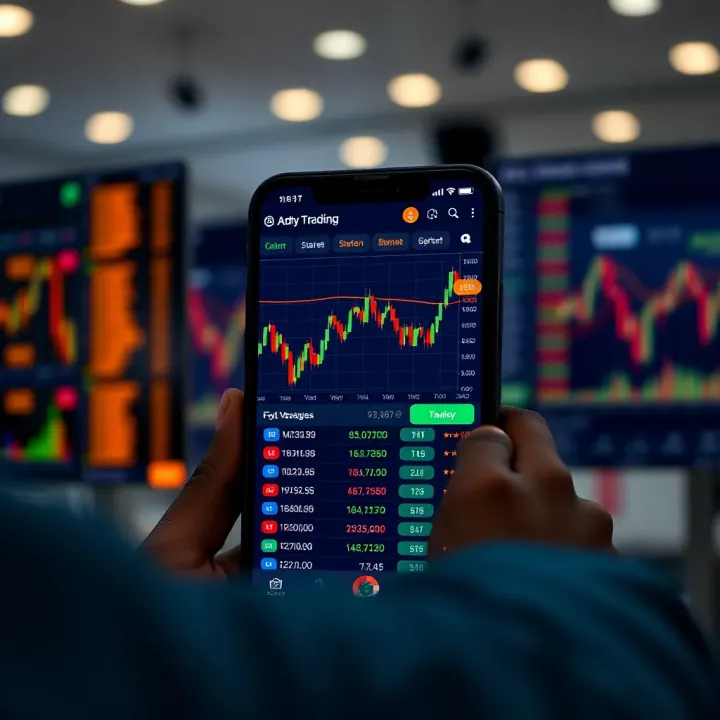
📈 New to trading in Nigeria? Discover how to pick the best trading app for beginners with key tips on safety, popular apps, and starting smart! 🇳🇬
Based on 12 reviews